If you need quotes about mentorship for a thank you note, the ones that work best are short, honestly attributed, and paired with one specific thing the mentor actually did for you. A borrowed line gets you started; the detail that follows it is what makes the note land.
I write a lot of end-of-programme notes and cards, and the pattern is consistent. When the note is generic, it reads like a form letter. When it names the exact advice and what changed because of it, people keep the card.
Below are ten quotes with the feeling each one carries, the note length it suits, and the kind of detail to write next to it. Eight of them come from named speakers you can attribute cleanly. The other two I have left open on purpose, because sometimes your own line says it better than anyone else’s.
Table of Contents
- 1Quotes About Mentorship for a Thank You Note at a Glance
- 21. A Quote About Guidance That Lasts
- 32. A Quote About Being Encouraged
- 43. A Quote About Wisdom Passed Forward
- 54. A Quote About Seeing Someone’s Potential
- 65. A Quote About Teaching and Learning
- 76. A Quote About Support During Growth
- 87. A Quote About Honesty and Direction
- 98. A Quote About Confidence and Achievement
- 109. A Quote About Generous Leadership
- 1110. A Quote About Gratitude That Lasts
- 12How to Choose the Right Mentorship Quote
- 13How to Add a Personal Detail
- 14Frequently Asked Questions
- 15What is a good quote about mentorship for a thank you note?
- 16How do I make a mentorship quote feel personal?
- 17Can I use a quote in a handwritten thank-you card?
- 18What if I want a short quote for a teacher or manager?
- 19Should I explain exactly how the mentor helped me?
- 20Can I combine a mentorship quote with my own words?
- 21Conclusion
Quotes About Mentorship for a Thank You Note at a Glance
| Where the note is going | Best pick from this list | Ideal length | Feeling it carries |
|---|---|---|---|
| Handwritten card | Number 2, the Mandela line | 20 to 40 words | Warm and encouraging |
| Formal thank-you letter | Number 5, the Henry Adams line | 120 to 180 words | Respectful, lasting credit |
| Professional email | Number 8, the Churchill line | 80 to 120 words | Confident, forward-looking |
| LinkedIn post or endorsement | Number 9, the Hoffer line | 40 to 70 words | Generous, public credit |
| Card for a retiring mentor | Number 10, the Angelou line | 30 to 50 words | Deep, lasting gratitude |
| Note to a teacher or professor | Number 1, the Roosevelt line | 40 to 70 words | Quiet admiration |
1. A Quote About Guidance That Lasts
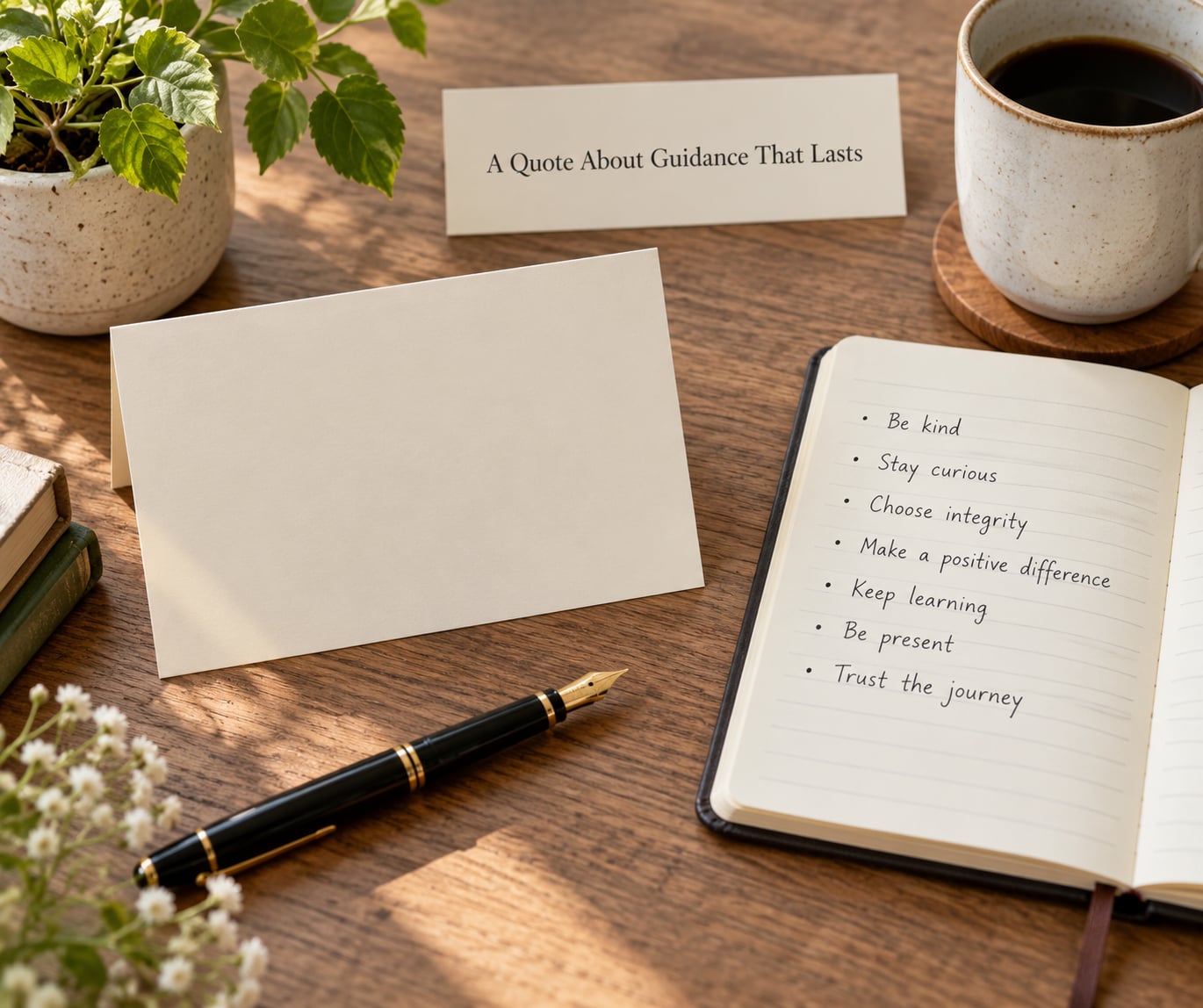
“A good teacher can inspire hope, ignite the imagination, and instill a love of learning.” Theodore Roosevelt said it, and it is the right pick when the mentor shaped how you think rather than what you do on Monday morning.
Pair it with one example of a habit you still run. The strongest version names the piece of advice and the moment it arrived, then shows where it turned up again later.
Here is how that reads on a card:
Thank you for the advice about writing the difficult email before you are ready to send it. It still goes in the notebook I keep at my desk, and it changed how I handle every conversation I have been avoiding. Your guidance outlasted the project it came from.
That version names one thing, one moment and one lasting result. It is far more convincing than opening with “thank you for everything.”
2. A Quote About Being Encouraged
“It always seems impossible until it is done.” Nelson Mandela wrote it, and it fits a thank you to a teacher, coach, parent or friend who kept you going through a stretch when you were not sure you would get there.
This one works best short. When the mentorship involved encouragement rather than instruction, three or four lines carry the whole message. Save it for a card or a quick note after a hard term, a difficult placement or a long programme.
Some days I genuinely thought I had no more of it left in me. You never once made me feel behind, and that is the reason I finished. “It always seems impossible until it is done” is exactly what you told me, and you were right.
People in nursing and teaching forums describe the same thing: the advice that lands is the mentor’s own words repeated back with an example of where it was applied. That is what separates this from generic praise.
3. A Quote About Wisdom Passed Forward
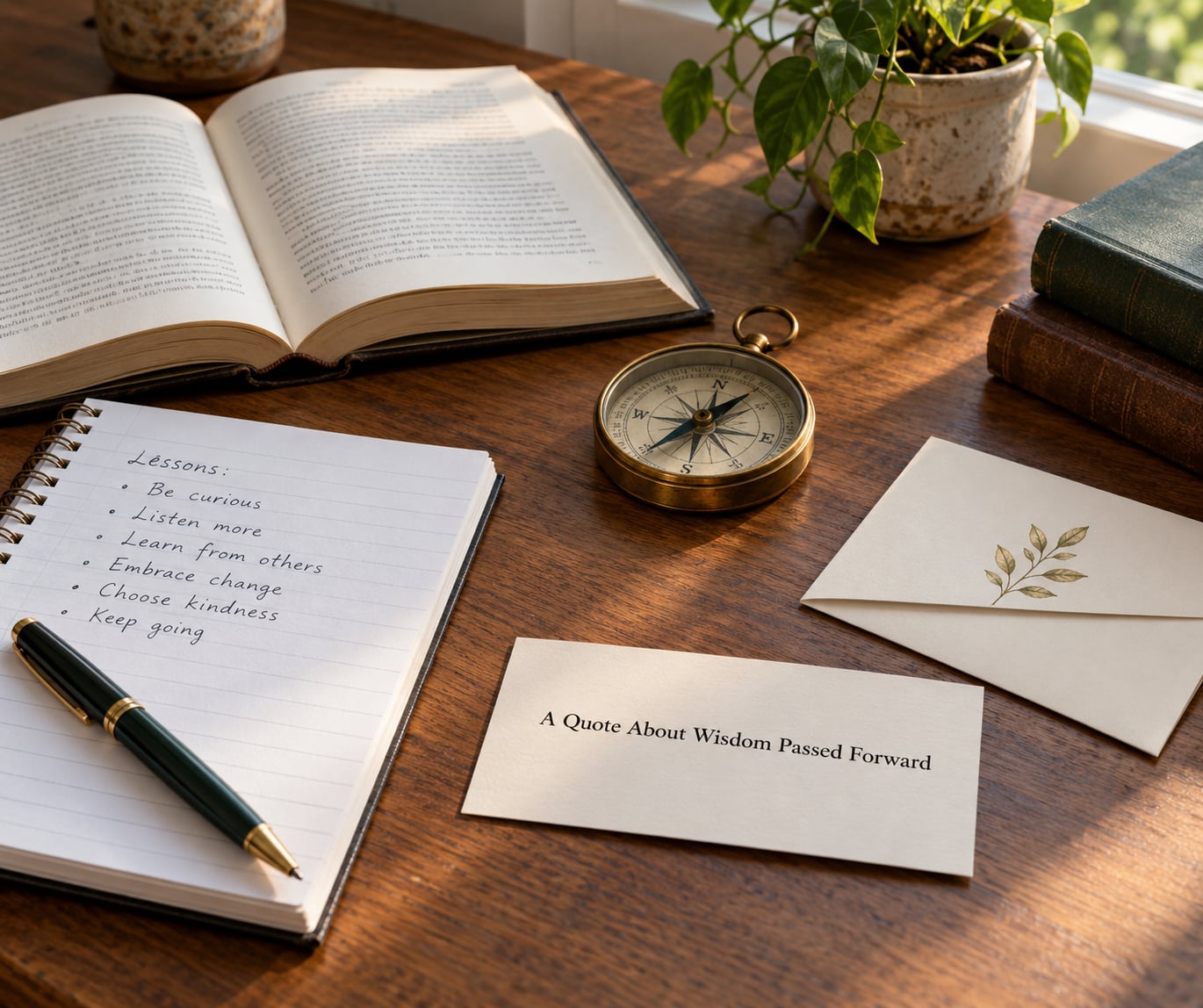
“One child, one teacher, one pen and one book can change the world.” Malala Yousafzai said it, and it is the strongest option when the mentor’s influence has already reached other people through you.
There are three natural ways to use it. Lead with the quote and immediately name someone the mentor pointed you toward, or use it to close a note that lists what you now do for others the way you were taught. Or use it in a note from someone who has been a mentor for years and wants to name the chain rather than just the link.
You told me once that what you know is only useful once you hand it to someone else. Two of the juniors on my team are working with you now, and every good habit in their file started in a conversation I had with you.
If your mentorship was short, one session or one project, this quote is a good fit. People worry that a brief arrangement does not warrant a note. It does.
4. A Quote About Seeing Someone’s Potential
This one is worth writing yourself, because almost nobody frames potential well in borrowed language. Try a single line in your own voice: “You saw something in me before I had the evidence for it, and you never let me forget I was capable of it.”
Then add a moment that proves it. Graduation, a first promotion, a hire you nearly talked yourself out of, a project you did not think you could handle. The memory does the work.
At my graduation review you told me I would end up running the department within five years, and I laughed it off in the room. I started running it last month. You were not being kind, you were being accurate, and I finally caught up to your assessment.
That structure, doubt in the moment and proof later, tends to be the part people remember.
5. A Quote About Teaching and Learning
“A teacher affects eternity; he can never tell where his influence stops.” Henry Adams wrote it, and it is the most dignified line here for a formal letter to a professor, instructor or clinical preceptor.
Use it when the note needs weight and length, one hundred and twenty words or more. Follow it with a clear account of a skill you did not have before and now do without thinking about it.
When I started on the unit I could not read a chart quickly enough to keep up with the rest of the team. You made me repeat the process until it was automatic. The difference showed up the first week I ran the floor alone, and I owe that entirely to the standard you set.
If you are thanking a nurse preceptor, thank the unit rather than only the individual. Wards and departments tend to pass along the appreciation, and it keeps the note from reading like a transaction.
6. A Quote About Support During Growth
“It does not matter how slowly you go as long as you do not stop.” The line is widely attributed to Confucius, and it suits a thank you for patience, steady presence and honest feedback delivered over many months.
This is the quote to reach for when the mentorship felt like a long, unglamorous process. Nobody is thanking a mentor for a single brilliant conversation here. You are thanking them for the Tuesday afternoon they were still available after the eighth setback.
Eight months in, you never once made me feel like I was asking too much. Every time I stalled you asked what had changed and what had not, and then we started again. I would not have finished without that patience.
Specifics about frequency carry more feeling than adjectives. “You were there on eight of my nine deadlines” says something an “incredible mentor” cannot.
7. A Quote About Honesty and Direction
Borrowed quotes tend to go soft when the message is hard feedback. Write this one instead: “You told me what I did not want to hear, and you were right, and I would rather have had that conversation sooner.”
Then say what you did with it. Did you change a habit, drop a project, take a role, renegotiate something? Without that second half, this reads as a complaint.
When you reviewed my plan you said the numbers were optimistic and my timeline was not realistic. I was annoyed for a week and then I rebuilt the whole thing. I ended the quarter with more margin than the plan I refused to change.
This is often the hardest note to write and the most appreciated one. Mentors rarely hear that their difficult advice landed.
8. A Quote About Confidence and Achievement
“Success is not final, failure is not fatal: it is the courage to continue that counts.” Winston Churchill is credited with the line, and it is the one to use when you are marking a milestone rather than closing a chapter.
For a formal note, open with it and follow with what you reached. For a casual card, use the second half only, the line about courage, and keep the whole thing under fifty words.
I passed the exam on the second attempt after failing it once, and you were the reason I signed up again. The line you sent that week is taped inside the folder I used for revision.
Professional email version: thank them, name the milestone, and add one sentence about what you will now bring back to their team. Inboxes fill with vague praise every single day, so make yours skimmable.
9. A Quote About Generous Leadership
“The little things? The little moments? They aren’t little.” Eric Hoffer wrote it, and it is the best line here for a manager, supervisor or community leader who gave time, introductions or opportunities without asking for anything back.
It suits a public note, a LinkedIn post or an email to a team, and it works particularly well with a list attached. Name three specific small things. The introductions, the five-minute check-ins, the recommendation that got you through a door.
You spent three separate lunches introducing me to people in the field, and none of them were things you needed. The role I hold started with one of those conversations. I think about how rarely that kind of generosity gets written down.
Public credit like this is worth more than it feels. If you are writing a recommendation or an endorsement, one honest paragraph with a concrete example travels further than a page of adjectives.
10. A Quote About Gratitude That Lasts
“Gratitude is the deepest form of appreciation.” Maya Angelou is credited with it, and it closes the set as the general-purpose line for a note with no particular angle.
Personalise it with one memorable moment. Pick a single scene rather than a summary: the phone call that arrived at the right hour, the repeated question you now ask yourself, the piece of advice you have passed on.
You called me the week I got the job, before I told anyone else. I still have the voicemail. I do not have a tidy way to describe what you did for me across those two years, so I will just say thank you, and mean it.
Ending on a short sentence is better than ending on a quote. The borrowed line opens the door; your own words are what the mentor keeps.
How to Choose the Right Mentorship Quote
Choose by relationship first. A manager note and a note to a close family mentor cannot share a tone, even with the same quote underneath. Second, match the length to the format, which is where most people go wrong.
Cards work at twenty to forty words, emails at eighty to one hundred and twenty, formal letters at one hundred and twenty to one hundred and eighty. LinkedIn posts sit at forty to seventy. If your draft runs longer than the format allows, cut the second example rather than the specific detail.
Third, match the quote’s feeling to what you actually received. Encouragement quotes for difficult seasons, teaching quotes for skills, honesty quotes for hard feedback. Sending a leader’s line to a coach reads like a template, and people sense that.
Fourth, check the attribution before you send. Write the speaker’s name correctly and make sure the line is one you can trace to them. If you cannot find a reliable source, leave the name off and use it as your own line instead. A misattributed quote on a thank-you card is a small, avoidable embarrassment.
How to Add a Personal Detail
The quote does the opening; one concrete detail does the rest. Forum readers across nurse and student communities keep repeating the same advice: a note that names the mentor’s own words, repeated back with an example, is the one that gets remembered.
Fill in one of these five blanks and you have your paragraph: a lesson you still apply, a moment that changed your approach, a hard challenge they stayed steady through, a skill you did not have before, or an opportunity they put in your path.
Fill in the blanks: I still ______ every time ______. You told me ______, and at the time I ______. Because of it, ______.
Keep the mentor at the centre of the note. Sentences that spend more time on your own feelings than on what they did come across as asking for a response, which turns a thank-you into a request. Send it within a few days while the memory is fresh, and you are done.
Frequently Asked Questions
What is a good quote about mentorship for a thank you note?
A good mentorship quote is short, honestly attributed, and about something the mentor actually did rather than about gratitude in general. Lines like the Roosevelt line on teachers or the Mandela line on encouragement tend to work well, because they describe the effect of mentoring instead of just praising it.
How do I make a mentorship quote feel personal?
Keep the quote short and put most of your words into one specific detail. Name the advice you received, the moment you received it, and what changed afterwards. A borrowed line of twelve words followed by three sentences about your own experience reads as a note written for one person.
Can I use a quote in a handwritten thank-you card?
Yes, and it suits a card better than a long letter because of the space. Cards work at roughly twenty to forty words, so choose a short line and give the rest of the space to one specific detail. Write it by hand if the relationship is close and long term.
What if I want a short quote for a teacher or manager?
The second half of the Mandela line, that it always seems impossible until it is done, fits a teacher. For a manager, the second half of the Churchill line about courage fits a professional tone in a single sentence. Both leave plenty of room for one concrete example.
Should I explain exactly how the mentor helped me?
Yes. Readers consistently say that the mentor’s own advice repeated back with an example of how it was applied is what lands. Generic praise reads as a form letter. Naming the exact conversation or habit is what turns a note into proof that you were paying attention.
Can I combine a mentorship quote with my own words?
That is the ideal structure. Open with the quote so the reader knows the note is about guidance and growth, then write the detail, then close with your own sentence rather than a second quote. Ending on your own words is what the mentor actually keeps.
Conclusion
Start by picking the one quote that matches what your mentor actually did for you, not the one that sounds most impressive. The Mandela line fits encouragement, the Henry Adams line fits formal credit for teaching, the Churchill line fits a milestone you just reached.
Then add one specific detail: a lesson, a moment, a piece of feedback or an opportunity, with what changed because of it. That single paragraph is what separates a note people keep from one they file. Send it within a few days, before the memory and the moment both fade.