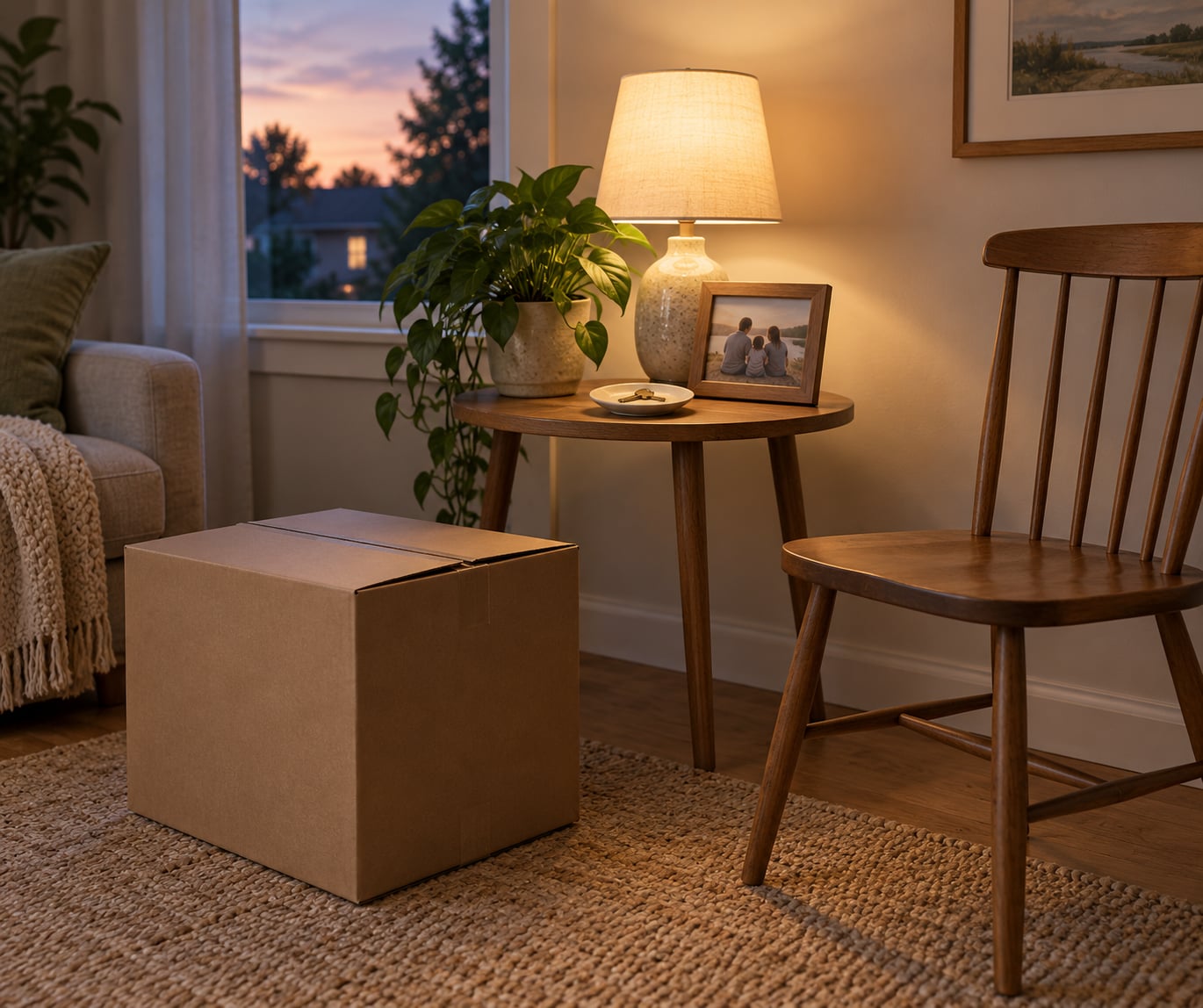
Empty nest syndrome is the grief, identity shift and loss of purpose many parents feel when the last child moves out and a home built around raising children suddenly goes quiet. Quotes about empty nest and letting kids go help because they put a name to a transition nobody warns you about, and they give you language for the card, the graduation toast or the 9pm text you are not sure how to send.
Below you will find 12 reflections, each with the feeling behind it and a real situation to use it in. Some are attributed to named writers, some are traditional sayings with no documented author, and a few are original lines written for this collection and labelled as such. I have never been comfortable pasting something on a card because it looked good in a quote graphic without knowing where it started, so every attribution here is either sourced or flagged as unverified.
One note before you start. If your child is eighteen and still needs structure, or your relationship is strained, forcing the empty nest is not the point. Letting go is about releasing control, not about withdrawing love, and a good quote should never make a parent feel guilty for holding on a while longer.
Table of Contents
- 1Quotes About Empty Nest and Letting Kids Go at a Glance
- 21. A Home Is Still Their Home
- 3Using Quotes About Empty Nest and Letting Kids Go Kindly
- 42. Letting Go Does Not Mean Stopping Loving
- 53. Their Independence Is Something You Helped Build
- 64. The Door Remains Open
- 75. Love Changes Form as Children Grow
- 86. An Empty Room Is Not an Empty Life
- 97. Worry Is Common, but Distance Is Not Proof of Failure
- 108. Roots Remain After New Branches Grow
- 119. Saying Goodbye Is Part of Growing Up
- 1210. Your Child Still Needs You in a New Way
- 1311. New Rituals Can Preserve Connection
- 1412. The Parent Grows Too
- 15Frequently Asked Questions
- 16How do I celebrate an empty nest without dismissing what I am feeling?
- 17What is a good quote to send when an adult child moves away?
- 18Why do some parents feel sad when all their children leave home?
- 19How often should I contact my adult child after they move out?
- 20How can I give my child more independence without feeling abandoned?
- 21Conclusion
Quotes About Empty Nest and Letting Kids Go at a Glance
| Shortened quote | What it carries | Best moment to share it | Practical use |
|---|---|---|---|
| A home is still their home | Reassurance | Moving-day card | Card or moving note |
| Letting go is not stopping loving | Warmth without control | After a tough first month alone | Text message |
| Their independence is something you built | Pride | First job, first apartment | Wall print or note |
| The door remains open | Belonging | Graduation or leaving for college | Graduation card |
| Love changes form | Acceptance | When the parent becomes a friend | Toast or letter |
| An empty room is not an empty life | Hope | Grieving the daily rhythm | Sympathy note to a friend |
| Worry is common, distance is not failure | Relief | When a kid stops sharing | Private journal line |
| Roots remain after new branches grow | Continuity | First grandchild, holidays | Family tradition card |
| Goodbye is part of growing up | Courage | Farewell note on moving day | Letter or card |
| They still need you in a new way | Purpose | When they ask for comfort, not fixes | Coaching note |
| New rituals keep you close | Connection | Setting weekly call time | Group chat message |
| The parent grows too | Freedom | Signing up for the thing you gave up | Personal caption |
1. A Home Is Still Their Home

Original reflection: The room is theirs. Not the one you will check on before bed, but still theirs, with the door unlocked and the same tired towel on the floor hook.
This one reassures without demanding anything. A lot of empty nest quotes quietly carry an expectation that an adult child should call more, visit more, treat the empty house as an unfinished obligation. That is exactly why a line about the door staying open works so much better than a line about the missing sound of footsteps.
Keep it short on the moving day. My version inside a moving-day card is four lines: the key is on the hook, the wifi code is on the fridge, call if anything breaks, and the door is open on Sundays.
Using Quotes About Empty Nest and Letting Kids Go Kindly
Kind wording does one job: it holds both feelings at once. Pride and sadness sit in the same breath for most parents, and a quote that only allows one of them reads as false.
Good occasions are moving day, graduation, the day after the last child leaves, and the week a parent admits out loud that the house is too quiet. A bad occasion is any moment the child is struggling, where a polished line about open doors can land as indifference.
Before you share anything attributed to a named person, check it. Search the exact wording, look for a book or interview behind it, and if you cannot find one, leave the name off or say it is a popular saying. Passing a false attribution along is how a beautiful line turns into a joke at a funeral.
2. Letting Go Does Not Mean Stopping Loving
Love never fails. Not a solo song, not a slogan. That is the whole of 1 Corinthians 13:8, and it lands harder in month three of an empty house than it does at a wedding.
C.S. Lewis wrote, “Love, having made itself not be loved, cannot stop till it has given all,” in The Four Loves. It is a heavy line for a card, so I use it for the parent who needs permission to stop performing enthusiasm about the change.
The practical distinction matters: releasing control means letting a young adult pick a bad roommate, apply for a job you would not have chosen, and tell you about it late. Withdrawing affection looks like silence and punishment. One builds a person, the other just builds a wall.
A real example. A mother whose son had been laid off wrote that she sat in his kitchen every afternoon trying to fix it until he said, kindly, that he needed help finding work and not a manager. She shifted to driving him to interviews and asking about his week. That is the same love with the hands loosened.
Letting go is usually described as one large decision, but in practice it arrives as a series of small surrenders. You stop calling in front of their friends, then stop knowing where they are at 11pm, then stop being the one who books the holiday. Each one feels like a small loss, and the sum of them is why month three hits so hard.
3. Their Independence Is Something You Helped Build
Dr. Seuss put it better than most philosophers: “Today you are you, that is truer than true. There is no one alive who is youer than you,” in the 1990 book Today You Are You. A child who is doing well in a city three hundred miles away is not a rejection of home. It is a report card.
Reaching this reframing is most parents’ turning point. Guilt says a child needed more from you. Reframing says the child needed less from you because you gave enough. That switch is uncomfortable at first and then it holds.
A message I would send after a first big milestone, something like: proud of how you handled the lease negotiation, drive safe on Sunday, call your grandmother. Specific praise lands differently than a generic I am proud of you, because it tells them you actually saw what they did.
4. The Door Remains Open
Give the ones you love wings to fly, roots to come back and reasons to stay. This is one of the most widely shared sayings in this space, and no author is documented for it, so I pass it along with the same caution as a recipe from a neighbour.
The point of the door metaphor is availability, not pressure. Your child can come back Sunday, call when it goes wrong, and know the fridge has their name on it. That is a door. Texting twice a night to check they are alive is a tollbooth.
For a graduation or first-apartment card, I like something warmer than the wings line. Mine reads: your room is still your room, the good pillow is in the closet, and Sunday dinner does not need a reservation.
A graduation card is also a place where parents often over-promise. The line that stays honest is the one that promises a specific, repeatable thing, because that is the only kind a twenty-two-year-old can actually hold you to.
5. Love Changes Form as Children Grow
Kahlil Gibran, in The Prophet (1923): “Your children are not your children. They are the sons and daughters of Life’s longing for itself. They come through you but not from you.” Parents who read it as freedom take out the last half, which is wrong. The following lines say the work is ours, not theirs.
Supervising turns into advising. Advising turns into listening. Listening is the hardest stage, because you have to stop fixing. The relationship shape changes and the love underneath it does not have to.
Martin Luther King Jr. put the skill in a sermon: “Love is the only force capable of transforming an enemy into a friend,” from Loving Your Enemies, delivered in 1966. That is the skill on a Tuesday night when the adult child is short with you.
A concrete move. If your adult child asks for less frequent check-ins, say yes out loud, agree a real number, like every Sunday at four, and then honour it even when you have news. Breaking an agreed rhythm teaches them your door is unreliable.
6. An Empty Room Is Not an Empty Life
Wherever you go, there you are. Jon Kabat-Zinn took that line from a Zen proverb for the title of his 1994 book, Wherever You Go, There You Are, and it answers the question parents are really asking when they say the house feels empty.
The sadness is real and specific. In the parents I read about, it is never abstract. It is wet towels on the floor, it is music from down the hall at eleven at night, it is a 6pm house that used to be loud at 6pm.
Distinguish the missing rhythm from a failed family. A quiet home means a job got done. If the grief feels like proof you did something wrong, say that sentence out loud to somebody who is not your spouse, because that thought rarely survives being spoken to another adult.
For someone you love in this season, a short note beats a quote. Something like: I know 6pm has been strange here too. Come Saturday, bring nothing, and we will order too much.
7. Worry Is Common, but Distance Is Not Proof of Failure
In a thread on reddit.com/r/GenX collected while researching this piece, one poster put it plainly: “It’s okay to ‘let go’. Even if it’s a painful choice to do so, the burden that is released allows a feeling of lightness.” It is unsentimental and it is right.
Worry is the reflex, not the evidence. You worry because a job site has gone quiet, not because you did something wrong. Concern and blame feel identical in the body and mean completely different things, and only one of them helps your adult child become a capable adult.
Viktor Frankl, writing in Man’s Search for Meaning, observed that everything can be taken from a person but the last freedom, which is to choose one’s own attitude. Applied here, it looks like noticing that they did not tell you about the leak in the flat, and choosing not to make it a trial.
Remember that the same instinct that kept you up listening for the car in the driveway can become the instinct that knocks on your child’s door at the wrong hour. Trust is not the absence of that reflex. Trust is acting like it is there.
The line to keep nearby when the worry starts: a parent who stayed awake does not owe a child a permanent apology for staying awake. Say it to yourself, then let it go.
8. Roots Remain After New Branches Grow
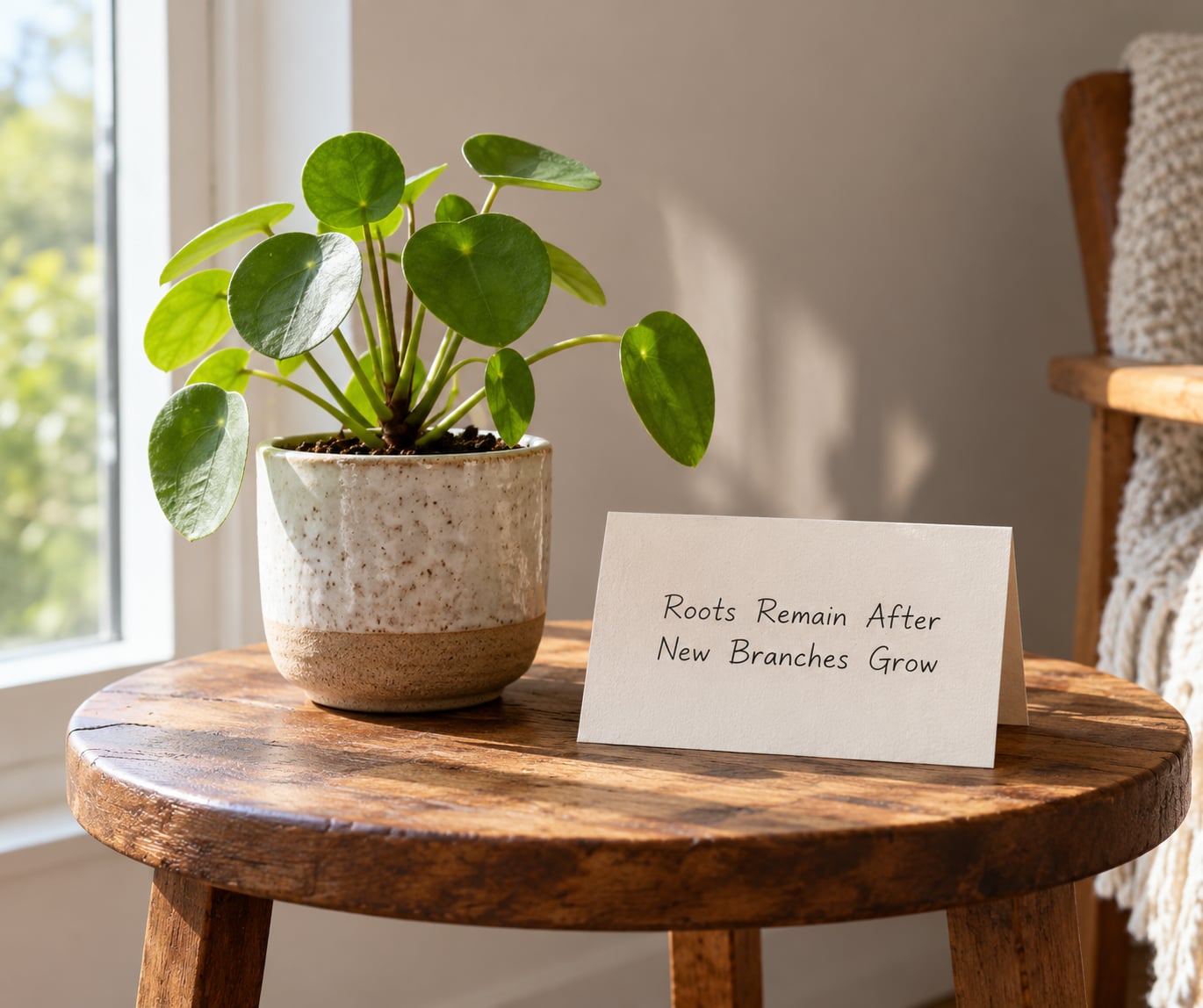
The Psalmist wrote, “He will be like a tree planted by the streams of water, whose fruit does not wither” in Psalm 1:3. Trees in that verse keep putting out growth in directions the gardener never chose. That is the botanical version of the empty nest.
Children can run three hundred miles away, marry someone you did not picture, and still turn up for the birthdays and the Thursday call. Independence and belonging are not opposites, and the tree metaphor says so better than most parenting advice.
What makes it true is the tradition you keep doing. We moved the holiday call to Wednesday because our daughter works Sundays now, and it is the one that has held for three years. Marking the move matters too: we framed the first picture from her first flat, which is still in her old bedroom.
Old invitations and old traditions do not survive a move on their own. They survive because somebody keeps sending them.
9. Saying Goodbye Is Part of Growing Up
Parting is such sweet sorrow, from Romeo and Juliet, Act 2 Scene 2. It has been quoted at roughly every graduation for four hundred years and it is still the accurate line.
Sadness and pride do not cancel each other out. You can cry in the car at the airport and believe completely in the decision, and holding both at once is more adult than pretending it is only one of them.
A farewell note that does not cry on the page. Mine says: the room will be here, the wifi password is under the mat, text when you land, and I already know you will be fine.
The line fits a farewell note better than a toast. Toasts are public and short, notes are private and can mention the thing you actually cried about, like the last time you checked the hall for shoes.
10. Your Child Still Needs You in a New Way
Original reflection: They stopped needing you to drive, and started needing you to answer the phone at the worst hour. Same parent, different job description.
That shift catches a lot of people off guard. For eighteen years a child’s need was mostly logistics, and then it turns into something harder to deliver because you cannot fix a bad month from another state.
Guidance moves toward three things: listening, practical help with a specific shape, and asking what they want rather than what you would do. The third one is the useful skill. Ask whether they want comfort or advice, and then give what they asked for.
Say it out loud on the phone once. I know you might want solutions, I am not going to give them unless you ask. It sounds clinical and it works, because it gives a stressed adult permission to actually say the thing.
Availability stays in place while the role changes. Being needed differently is still being needed, and that is a genuine gift to offer a tired 23-year-old.
11. New Rituals Can Preserve Connection
A tradition is a family we choose to keep. You will see this one attributed to different people without a traceable source, so read it as a proverb rather than a citation.
Connection at a distance runs on schedule, not on feeling. A weekly call at a fixed time, a shared meal once a month, an annual weekend, even a photo album in the group chat. What matters is that both people know when it happens.
Our weekly version is deliberately dull: Saturday morning, coffee, twenty minutes, no problem solving unless they raise it. My sister’s family does Sunday dinner every other week instead, which fits better around young kids. Same principle, different shape.
Maya Angelou wrote in Letter to My Daughter (1986), “Try to be a rainbow in someone’s cloud.” Small and consistent beats large and occasional, and a ritual is just a small thing that keeps happening.
Rituals also let you be a parent without hovering. Nobody calls a scheduled coffee awkward, which is exactly why scheduling works.
12. The Parent Grows Too
Quotes about empty nest and letting kids go often stop at the parents’ feelings. The other half is what you do with the hours that just opened up.
Mary Oliver asked, “Tell me, what is it you plan to do with your one wild and precious life?” from her poem The Summer Day. The empty nest asks that question with a deadline, which is uncomfortably effective.
A widely circulated line, attributed to Confucius with no documented source, says you cannot move mountains until you move small stones. Take the small-stones part seriously. The night class. The Saturday league. The sister you drifted from at twenty-eight.
One poster on reddit.com/r/self described going back to school at 45 once her children were grown and becoming the first doctor in her family. Nobody calls that an empty nest, but it started as one.
When I hear a parent describe feeling untethered, I ask what they used to want before the kids arrived. The answer is usually there, buried under two decades of logistics.
Frequently Asked Questions
How do I celebrate an empty nest without dismissing what I am feeling?
Celebrate the milestone, not the feeling. A card can mark what your child achieved without telling you how to feel about the house. If you want honesty, name both sides in one line: so proud of you, and I already miss the noise. Most parents find that naming the sadness out loud actually removes the need to announce it.
What is a good quote to send when an adult child moves away?
Pick something short that points at a standing invitation rather than at your feelings. The first line of this list, about the room still being theirs and the door staying open, works well because it is warm and asks nothing in return. Keep it under three lines for a text. A quote under twenty words is easier to answer than one that needs a paragraph.
Why do some parents feel sad when all their children leave home?
For roughly two decades your job was being needed daily, and that structure organised your mornings, your worries and your sense of purpose. When it stops, you lose the role before you lose the relationship, and the gap between what your days looked like yesterday and today feels enormous. It is a normal response to a real loss of routine, not a sign that you failed.
How often should I contact my adult child after they move out?
Agree on a rhythm that is predictable rather than whatever worry suggests that day. A weekly call, a monthly meal or a fixed holiday weekend works well for most families. The key word is agreed: if your child knows when to expect you, they stop bracing for the rest of the week, and you stop filling silence with reassurance texts.
How can I give my child more independence without feeling abandoned?
Keep the connection and release the control, which is a different thing entirely. Independence means they get to make choices you would not have made, ask for advice late, and run a household you would not have chosen. Your part is to stay reachable and to stay interested in their life. A fixed ritual plus genuine curiosity does more here than availability alone.
Conclusion
Pick the one line that matches what you actually feel today, not the one that sounds most grown-up. Check the attribution before you put a name to it, and if you cannot confirm it, send it without one.
Then write it somewhere a person will read it while it is still fresh: a moving-day card, a graduation note, a Sunday text. Quotes about empty nest and letting kids go are most useful in the first weeks, when the right words are hard to find on your own. Last reviewed for 2026, and every source here is worth a second check before you rely on it.