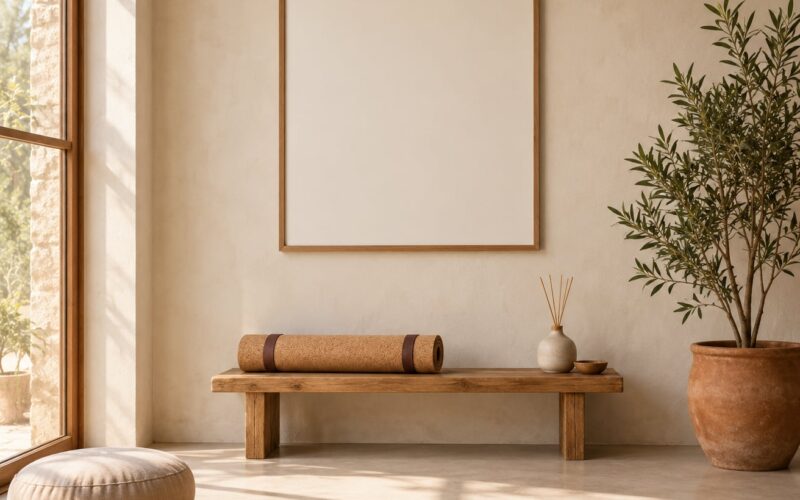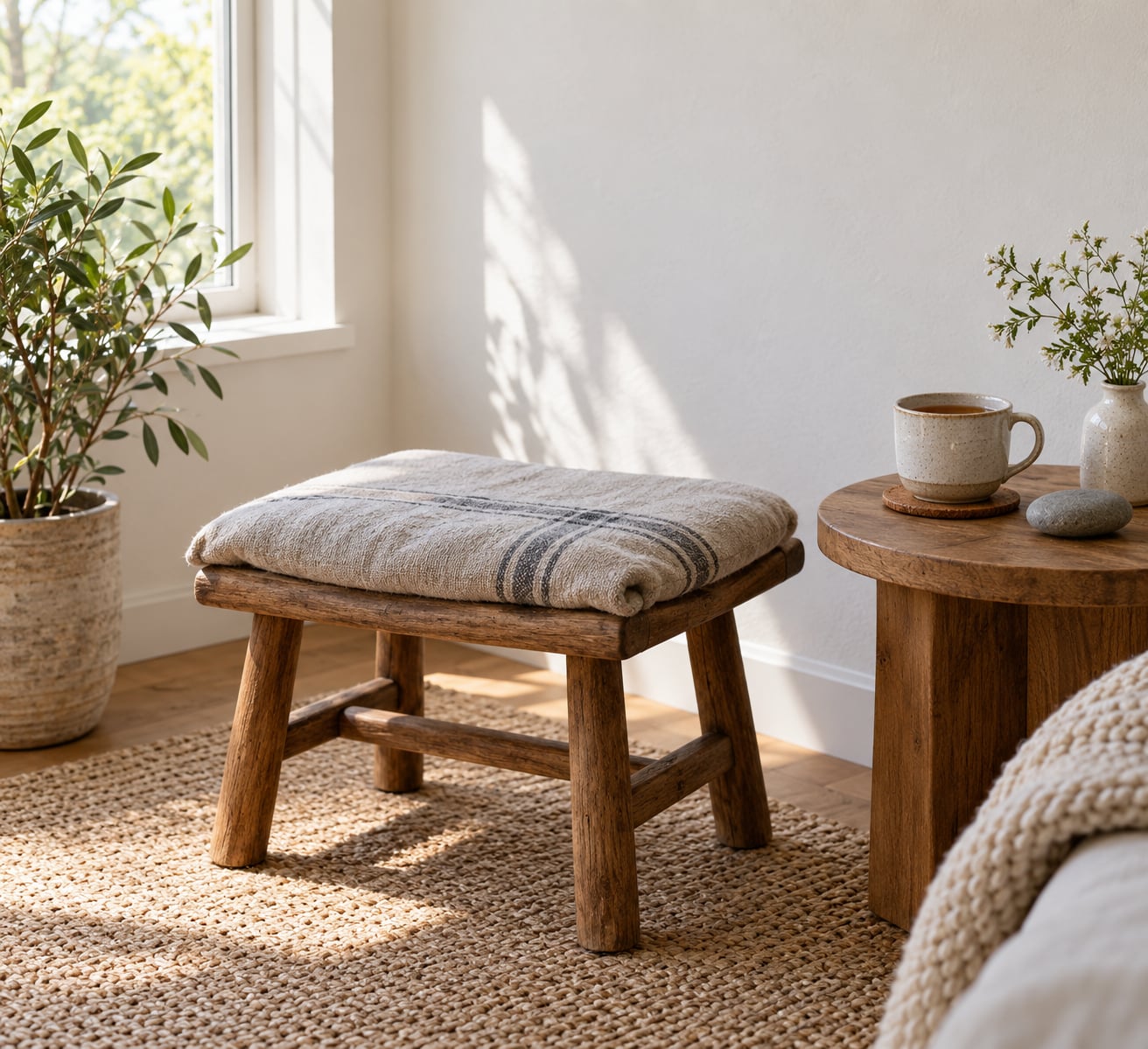
Quotes about meditation for a quiet corner are short lines chosen to be read, displayed, or simply sat with in one small dedicated place at home. This collection pairs six public-domain quotations with six original reflections, and gives you a practical way to use each one.
Two things shaped the selection. First, sourcing: several of the most-circulated meditation lines online have no verifiable origin, so anything disputed is labelled as disputed here. Second, display: a line that works on a card above a reading chair does not work as a wallpaper, so every entry tells you how long it is and where it suits best.
Last updated October 2026.
Table of Contents
- 1Quotes About Meditation for a Quiet Corner at a Glance
- 21. “Be Still, and Know That I Am God” — Psalm 46:10
- 3Using quotes about meditation for a quiet corner
- 42. “Adopt the Pace of Nature: Her Secret Is Patience” — Ralph Waldo Emerson
- 53. “Begin at Once to Live, and Count Each Separate Day as a Separate Life” — Seneca
- 64. “Very Little Is Needed to Make a Happy Life” — Marcus Aurelius
- 75. “The Quieter You Become, the More You Are Able to Hear” — Commonly Attributed to Rumi
- 86. “A Journey of a Thousand Miles Begins Under One’s Feet” — Laozi, Public-Domain Translation
- 97. “The Quiet Mind Is Not an Empty Mind; It Is a Mind at Peace” — Original Reflection
- 108. “Thoughts May Arrive Like Clouds, but You Remain the Sky” — Original Reflection
- 119. “In the Stillness, the Noise Reveals Itself” — Original Reflection
- 1210. “Breathe Slowly Enough to Hear the Space Between Breaths” — Original Reflection
- 1311. “A Quiet Corner Is a Place to Return To, Not a Place You Must Never Leave” — Original Reflection
- 1412. “What the Mind Releases, the Quiet Helps Restore” — Original Reflection
- 15Frequently Asked Questions
- 16What is the best quote to display in a quiet corner?
- 17How should I decorate a quiet corner for meditation?
- 18What can I do when my mind will not become still?
- 19How long should I spend in a meditation quiet corner each day?
- 20Can I use these meditation quotes in cards or on social media?
- 21Where to Begin in Your Quiet Corner
Quotes About Meditation for a Quiet Corner at a Glance
Here is the whole collection in one table. The mood column tells you what the line tends to bring to a sitting; the best-use column tells you how it behaves on a wall card, a phone screen, or a journal page.
| # | Quote or reflection | Source type | Primary mood | Best use in a quiet corner |
|---|---|---|---|---|
| 1 | Be still, and know that I am God. | Scripture, Psalm 46:10 (KJV) | Reverence, pause | Card above the seat |
| 2 | Adopt the pace of nature: her secret is patience. | Public domain, Ralph Waldo Emerson | Patience, slowness | Tea-time reading prompt |
| 3 | Begin at once to live, and count each separate day as a separate life. | Public domain, Seneca | Presence, urgency softened | Morning intention |
| 4 | Very little is needed to make a happy life. | Public domain, Marcus Aurelius | Enoughness, steadiness | Journaling anchor |
| 5 | The quieter you become, the more you are able to hear. | Commonly attributed to Rumi, origin unclear | Attention, listening | Reading corner card |
| 6 | A thousand miles begin beneath one’s feet. | Public domain translation of Laozi, ch. 64 | Beginning, permission | First-sitting motivation |
| 7 | The quiet mind is not an empty mind; it is a mind at peace. | Original reflection | Calm, clarity | Small wall card |
| 8 | Thoughts may arrive like clouds, but you remain the sky. | Original reflection | Distance, non-grabbing | Breath-and-name practice |
| 9 | In the stillness, the noise reveals itself. | Original reflection | Honesty, welcome | Wall card, loud-house days |
| 10 | Breathe slowly enough to hear the space between breaths. | Original reflection | Slowness, bodily attention | Phone screen reminder |
| 11 | A quiet corner is a place to return to, not a place you must never leave. | Original reflection | Ease, no guilt | Handwritten note on a mirror |
| 12 | What the mind releases, the quiet helps restore. | Original reflection | Release, repair | Evening journaling prompt |
1. “Be Still, and Know That I Am God” — Psalm 46:10
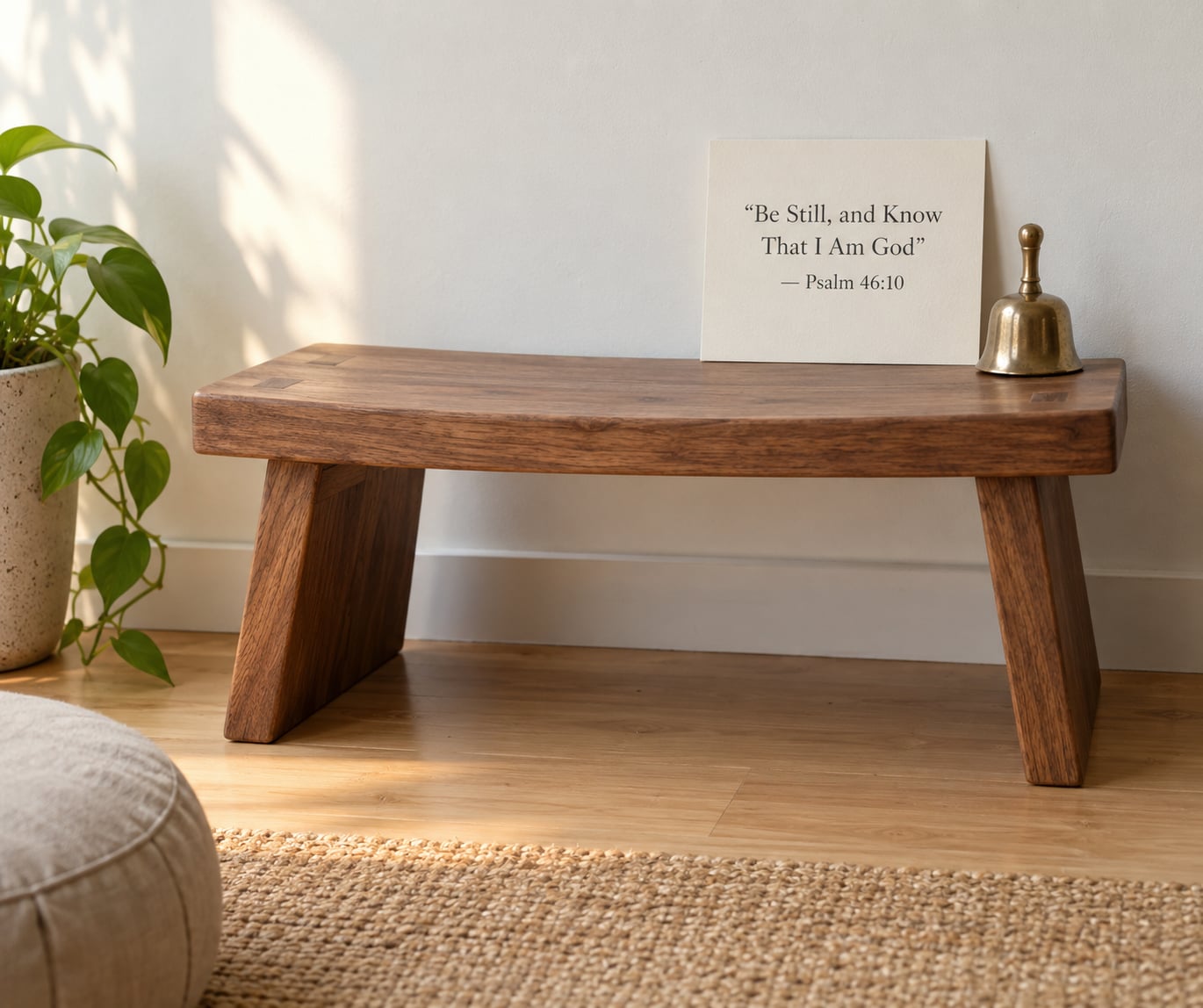
This is the King James Version of Psalm 46:10, and it is short enough to read in one breath. “Be still” in the older sense does not mean sit without moving; it means stop striving, stop arguing with your own thoughts, stop rushing the next thing.
Read it once before you sit, then let it go. The instruction is an invitation to pause, not a test you pass or fail.
Using quotes about meditation for a quiet corner
Here is the routine I use with a card like this. I write the line on card stock, tape it to the wall at eye level from a floor cushion, and read it before I settle. Then one minute of silence, then I get up and do the rest of my morning.
Repeat the same line for a week and something odd happens: you stop reading it and start recognising it. The card is not doing much work by then. You are.
2. “Adopt the Pace of Nature: Her Secret Is Patience” — Ralph Waldo Emerson
The line comes from Emerson’s essay “Attitudes,” published in 1872, so the wording is well out of copyright and safe to print in full. Emerson is arguing that natural things move at their own rate and suffer nothing for it, and that our impatience is the thing we could do without.
It pairs well with a hot drink. I set a cup of tea on the stool beside me and read this line, then drink it without doing anything else for five minutes. The cup is a useful prop because it gives an impatient mind a small, finishable job: drink it slowly.
Use this one on the days you feel behind. It is a slower line than the others here, so it works better read than displayed.
3. “Begin at Once to Live, and Count Each Separate Day as a Separate Life” — Seneca
This appears in the moral letters Seneca wrote to his brother, usually numbered the first letter, and translations render it slightly differently. The point survives every rendering: a day is not a unit of output to be judged at the end, it is the actual thing you are living in right now.
The line corrects a habit most of us have without noticing. We sit down and immediately assess the day so far: was it productive, was it wasted, could it have gone better. Then we defer the quiet to an evening that never arrives.
Write it on a card by the door for morning use. Reading it before the day starts works better than reading it after, because it removes the verdict rather than adding to it.
4. “Very Little Is Needed to Make a Happy Life” — Marcus Aurelius
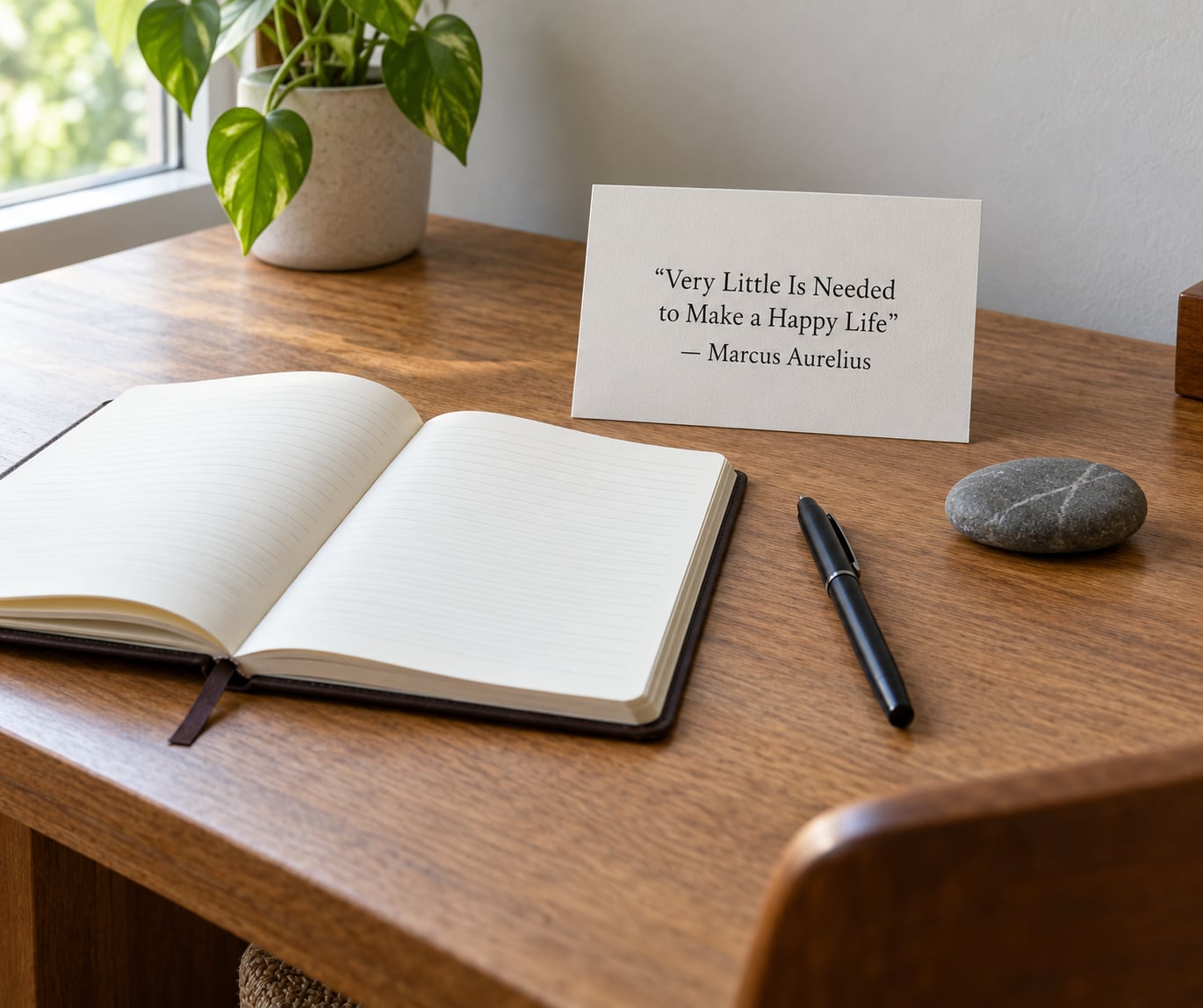
From Book V of the Meditations, in a widely circulated public-domain translation, the fuller line reads: “Very little is needed to make a happy life; it is all within yourself, in your way of thinking.” Marcus was writing to himself as an emperor with a very full diary, which is part of why the line lands.
It is worth reading this without turning it into a promise. Marcus is not claiming that thinking well rearranges circumstance. He is describing the one variable a person actually controls on a difficult day, and the quote is strongest when you take it as an observation about your own reactions rather than a verdict on your life.
For a journaling anchor, write the line at the top of a page and then answer one prompt underneath: what did I need today that turned out to be smaller than I thought? Five minutes is enough. The pebble in the picture above is not required, but a physical anchor object helps mark the page as different from a to-do list.
5. “The Quieter You Become, the More You Are Able to Hear” — Commonly Attributed to Rumi
This line circulates widely under Rumi’s name and has no verified source that I could find. Rumi’s work was written in Persian, much of it assembled after his death, and a great deal of material online attributed to him is unattributed. I would rather tell you that than invent a book and a page number.
What makes it useful is the claim itself: attention has a resolution, and lowering the volume raises it. You notice the fridge cycling, the neighbour’s footsteps, the difference between a real sound and a remembered worry.
Put it in a corner built for reading or conversation rather than solitary practice. There it does something practical: it tells a talkative room that there is listening happening too.
6. “A Journey of a Thousand Miles Begins Under One’s Feet” — Laozi, Public-Domain Translation
The familiar English line comes from Chapter 64 of the Tao Te Ching, which has been translated into English for well over a hundred years, so older renderings are public domain. Older translations use the “under one’s feet” phrasing; more recent popular versions usually read “begins with the first step.”
Both point at Chapter 64’s actual concern, which is how a long undertaking stays intact from its first movement. The “thousand miles” is not about distance. It is about beginning while the rest is still only possible.
For starting a practice, the modern one-step version is gentler: sit for one comfortable breath, or one minute, then decide whether to continue. Most people who quit meditation quit at the beginning of a sitting, not in the middle of it.
7. “The Quiet Mind Is Not an Empty Mind; It Is a Mind at Peace” — Original Reflection
This one is mine, not a historical quotation, and I have labelled it that way because unattributed lines are exactly the problem this collection is trying to avoid.
The distinction matters. A blank mind and a settled mind feel similar from the outside but nothing like the same from within. Blankness is a lapse. A mind at peace is still thinking, still noticing, simply not being dragged around by each arrival.
It works well as a small card, since the line is short and does not need a source underneath it. Someone reading your nook might ask where it is from, and saying “it is an original reflection” is a better answer than a wrong one.
8. “Thoughts May Arrive Like Clouds, but You Remain the Sky” — Original Reflection
Another original line. The image is old even when the sentence is not: the sky is not affected by the weather passing through it.
What makes it practical is the shift it encourages. Observing a thought does not require believing it. You can notice the anxious prediction about tomorrow’s meeting and simply label it, “planning,” the way you would label “kettle.”
Try it with a one-minute exercise. Breathe without counting, and each time something arrives, say the category quietly rather than the content. Worries, planning, remembering. The labels are the practice; the content is not.
9. “In the Stillness, the Noise Reveals Itself” — Original Reflection
Original reflection, and a deliberately honest one. Stillness does not remove noise. It makes ordinary noise audible for the first time: the extractor fan, traffic, a chair settling, someone’s television two rooms away.
So this line does not promise a silent house. It says that sitting quietly in a noisy house is where you find out what the noise actually is, which is often much smaller and much less constant than it felt at three in the afternoon.
Useful if your home is shared or thin-walled. Read it, name the loudest thing you can hear, then go back to your breath. The line rewards a reader who has a distracted corner rather than a perfect one.
10. “Breathe Slowly Enough to Hear the Space Between Breaths” — Original Reflection
Also original. There is a small pause between one breath out and the next breath in, and almost nobody notices it because attention is usually on the inhale instead.
You do not need a count, an app, or a technique. Let one exhale be slightly longer than it would be if you were in a hurry, and see whether the gap shows up. For some people it appears within a minute; for others, the breath simply gets shallower and stays that way, which is information too.
This is not a health instruction. If breathing practice makes you light-headed or uncomfortable, stop and sit comfortably with normal breathing instead. Nothing here is worth feeling worse over.
11. “A Quiet Corner Is a Place to Return To, Not a Place You Must Never Leave” — Original Reflection
Original reflection, and the one that fixed a habit of mine. I used to treat a missed sitting as evidence that the whole arrangement had failed, which made me avoid it longer.
The value is in the return, not in the streak. A chair, two minutes, and a quotation you have read a hundred times is enough of a practice to count on an ordinary afternoon.
Write it on a sticky note on your bathroom mirror, which is where you will see it at the exact moment you are most likely to skip it. It removes the shame, which was the part keeping me away.
12. “What the Mind Releases, the Quiet Helps Restore” — Original Reflection
The last one is original, and it closes the collection because it is the only line here that points at what happens after the sitting ends.
Meditation does not hand you peace on schedule. What it tends to offer is space around whatever is loud, and space is often where repair happens. You notice the argument you had, the thing you keep replaying, and it loses a little of its grip.
A good closing exercise: write down one concern, then one small deliberate next step. Not a resolution, just a next step. Then close the notebook and carry that single item out of the corner with you.
Frequently Asked Questions
What is the best quote to display in a quiet corner?
For most readers the best choice is a short line, under ten words, that needs no explanation. Psalm 46:10 or the original reflection about the quiet mind both work because you can read them in one breath from across the room. Pick a line you like the sound of, not one you think you ought to admire.
How should I decorate a quiet corner for meditation?
Keep it simpler than you expect. One seat, one surface, one line of text on a card, and as little visual clutter as the room allows. Lighting matters more than decoration: warm light and a spot that is not directly overhead tends to make a space easier to settle into.
What can I do when my mind will not become still?
Stop waiting for stillness and name what is arriving instead. Most restlessness in a quiet corner is an instruction problem, not a discipline problem. Try the clouds-and-sky line in item 8 above as a one-minute exercise, and remember that noticing a thought counts as the practice working, not failing.
How long should I spend in a meditation quiet corner each day?
Two to five minutes is a legitimate practice, and most beginners lose more by aiming for twenty than by starting at two. A short sitting you repeat beats a long one you abandon. Let the length follow the attention you actually have that day, not an expectation you set up the night before.
Can I use these meditation quotes in cards or on social media?
Yes, with one condition: keep the attribution honest. The public-domain lines can be reproduced and shared freely. For the lines marked as often-misattributed, use the phrasing honestly rather than attaching a famous name. For the six original reflections, credit this collection as the source.
Where to Begin in Your Quiet Corner
Choose one seat today. Not a meditation bench, not a dedicated room. The chair you are already sitting in while you read this qualifies.
Then choose one quote from the twelve above and read it for one minute without anything else to do. That is the whole beginning. A card on the wall can come later, once you know which line you actually want to look at every day.
Consistency is doing more work here than any elaborate setup. The quotes about meditation for a quiet corner that matter are the ones you return to, and returning is a habit you build by repetition rather than by finding a perfect arrangement.