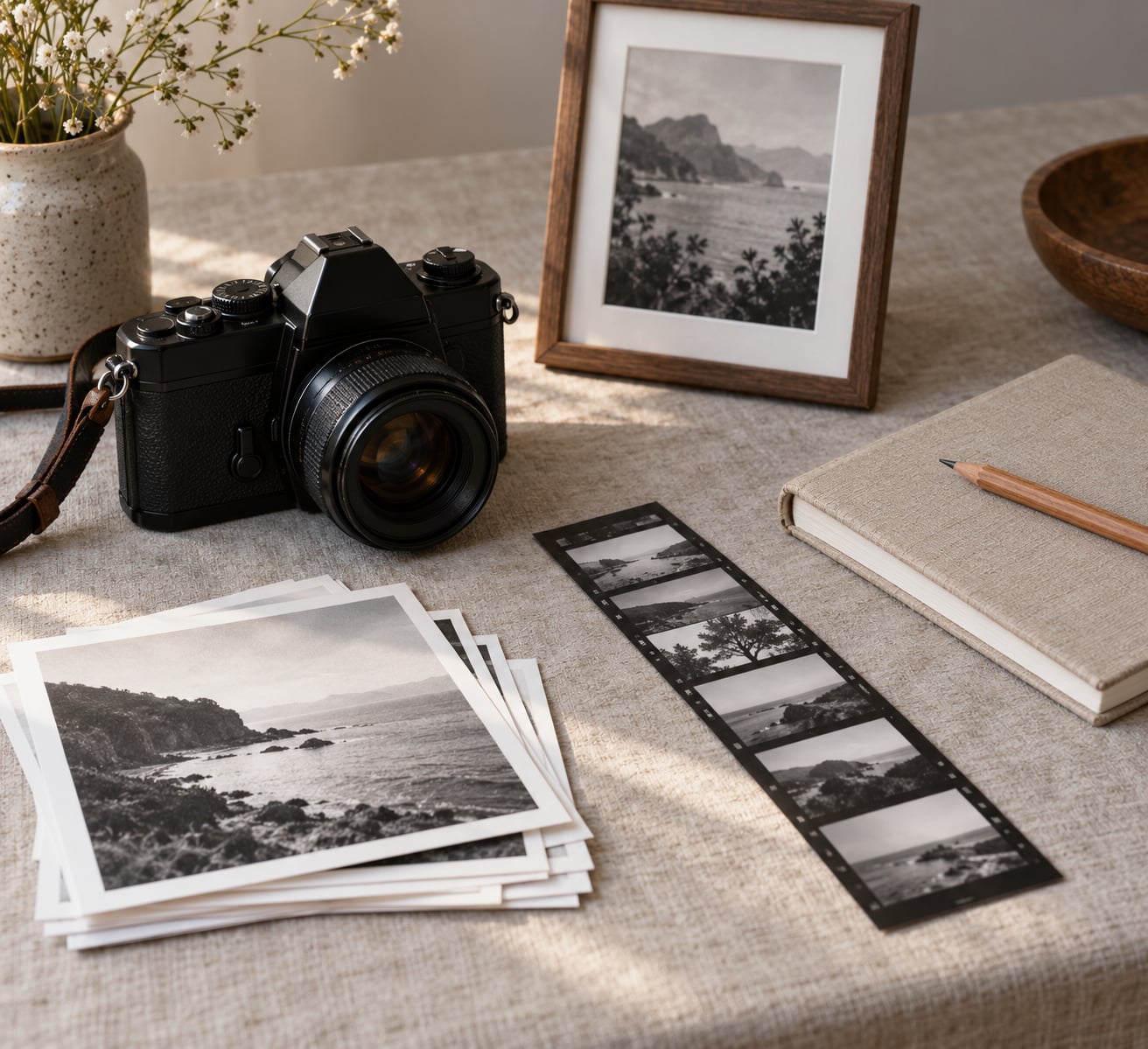
A good photography quote for a portfolio page is short, attributed, and matched to the section it sits in. It tells a visiting client how you see, and it fills the hero area where a portfolio is mostly empty space. Here I have gathered quotes about photography for a portfolio page that hold up under a browser, plus honest notes on where each one belongs.
Quick clarification, since the search results for this query are cluttered: these are inspirational quotations about photography, not pricing quotations. If you are looking for how to write a quote for client pricing, this is the wrong page.
One more thing worth saying up front. Several photographers have told me they picked a quote, felt good about it, then found months later that nobody can trace where it came from. Every quote below is paired with its speaker in the same sentence, and anything whose origin I could not confirm is labelled rather than dressed up.
Table of Contents
- 1Quotes About Photography for a Portfolio Page at a Glance
- 21. Ansel Adams on bringing something to the photograph
- 3Why it works above a photograph
- 42. Destin Sparks on photography as unwritten story
- 53. Diane Arbus on a secret about a secret
- 64. Henri Cartier-Bresson on holding your breath
- 75. Walker Evans on the camera as a machine for looking
- 86. Andy Brand on frozen time and stored emotion
- 97. Richard Avedon on needing a photograph
- 108. Elliott Erwitt on the frame after the subject leaves
- 119. Ansel Adams on a picture that stands on its own
- 1210. An unattributed moment, labelled honestly
- 13Where to place a quote on your portfolio page
- 14Five rules for the hero section
- 15Placement by section
- 16Quote length tiers for web use
- 17How to credit a quote correctly
- 18Frequently Asked Questions
- 19What is a good quote about photography for a portfolio page?
- 20Where should I put a quote on my photography website?
- 21Can I use famous photographers quotes on my website?
- 22Which photography quotes are misattributed?
- 23What should I write in my photography portfolio about section?
- 24How do I write a quote for my own photography portfolio?
- 25Conclusion
Quotes About Photography for a Portfolio Page at a Glance
Here is the short version of all ten, with the portfolio slot each one suits best. Scan this first, then read the fuller notes below.
| Central idea | Best portfolio slot | Suits |
|---|---|---|
| Seeing comes from the photographer, not the camera | About page | Documentary and fine art |
| Photography as the story words cannot hold | Project page intro | Narrative and travel series |
| Every frame hides something | Portrait project header | Portrait and street |
| Timing and the decisive moment | Gallery grid caption | Street and events |
| Attention matters more than equipment | About or approach section | Any niche, especially commercial |
| Emotion given permanence | Wedding or family series | Wedding, family, fine art prints |
| A finished idea, not a device | Services page | Commercial and product |
| Look for what is just leaving | Minimal architectural set | Architecture and candid work |
| Each picture stands alone | Gallery opener | Curated bodies of work |
| A moment captured in time | Time-based project header | Before-and-after series |
1. Ansel Adams on bringing something to the photograph
Ansel Adams, the American landscape photographer best known for his work in Yosemite, put it plainly: you do not make a photograph just with a camera, you need to bring something to the photograph. The line comes from his writing on how a print and a negative are interpreted, not just exposed.
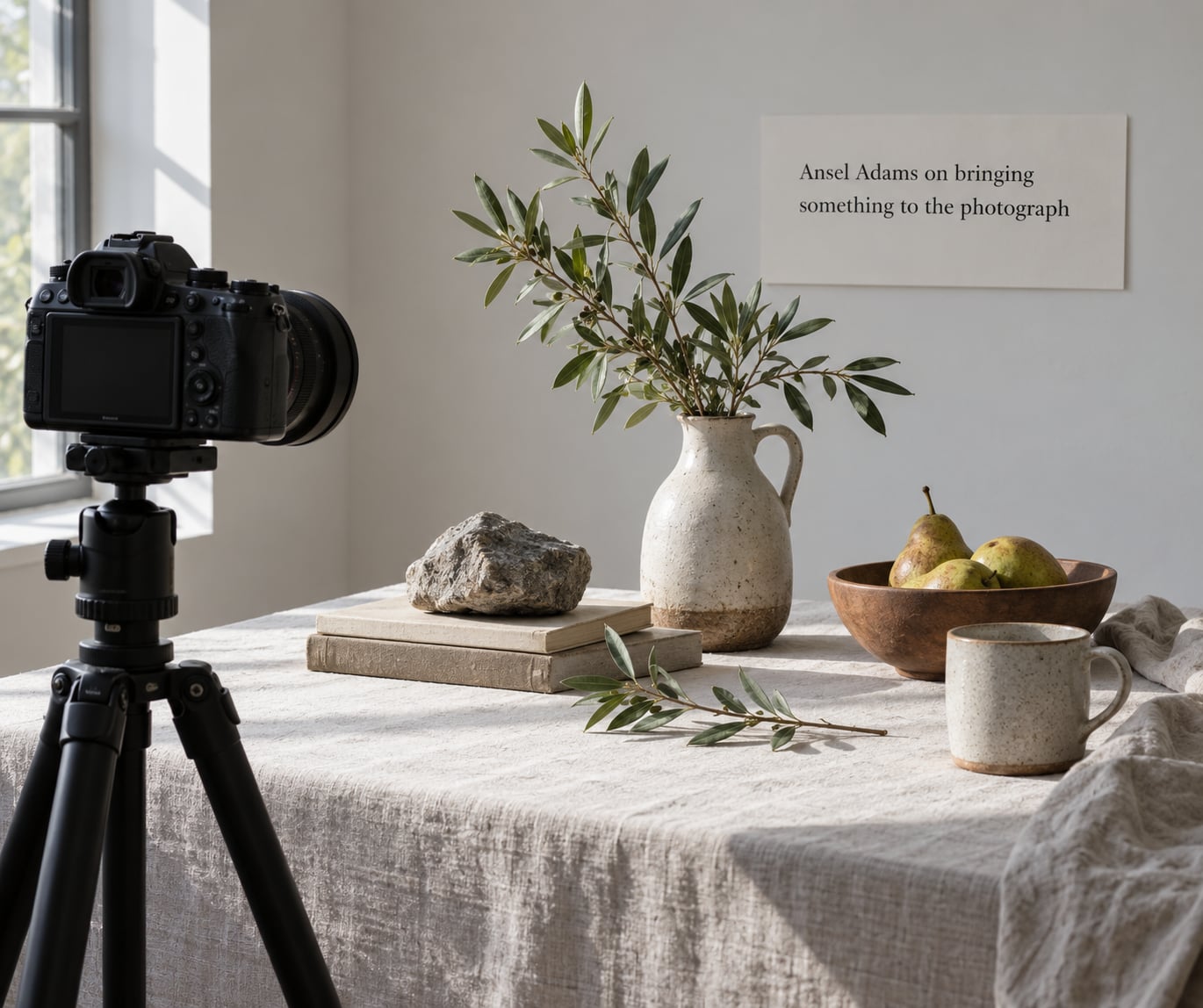
Use this one on an about page. It answers the question every client is quietly asking, which is whether you are pressing buttons or making decisions. I would put it beside a staged still-life or a carefully planned documentary frame, because it points at intent rather than luck.
Why it works above a photograph
It is 20 words, so it survives a mobile screen over a full-bleed image. It also sets an expectation that the rest of the page will deliver on craft. My only caution is that nearly every wedding site uses an Adams line, so if you want yours to register, this may be the one to skip.
2. Destin Sparks on photography as unwritten story
Destin Sparks, a writer and photographer who has worked across travel and personal projects, wrote that photography is the story I fail to put into words. It is a modest line, which is exactly why it works.
Pair it with a narrative portrait or a travel series where the images carry a plot. It reads well as the first line of a project page, above the grid, because it tells the visitor why these particular frames belong together. I have used a similar framing on a 30-image city series and it stopped people scrolling straight past the contact link.
3. Diane Arbus on a secret about a secret
Diane Arbus, the American photographer known for portraits of people on the edges of public life, said that a photograph is a secret about a secret. The observation is about what a frame reveals without quite explaining itself.
This is the right quote for a portrait, street, or documentary page. It signals that you are interested in people rather than in styling, and it gives a potential client a hint about what a session with you feels like. Keep it off a commercial product page, where it reads as pretentious next to a price list.
4. Henri Cartier-Bresson on holding your breath
Henri Cartier-Bresson, the French photographer who shaped much of twentieth-century photojournalism, described photographing as holding one’s breath, collecting on a film, and recording. It describes the fraction of a second when the frame either works or does not.
Place it next to a street photograph or an event frame where timing is visible. A groom turning, a kid mid-splash, a commuter crossing a gap between trains. The quote tells a client your timing is trained, which matters more to anyone booking a wedding than a list of lenses.
5. Walker Evans on the camera as a machine for looking
Walker Evans, the American documentary photographer behind the 1930s and 40s portraits of rural America, called the camera a machine for looking. His point is that the equipment is a pretext and the real work is attention.
This is a strong fit for an about or approach section, and a useful one for commercial photographers who keep hearing about gear. I would put it near three sentences about how you work rather than near a list of equipment. It reframes the whole portfolio as a way of seeing.
6. Andy Brand on frozen time and stored emotion
Andy Brand has written that photography is the art of frozen time, the ability to store emotion and give it permanence. It is one of the more direct lines in this collection.
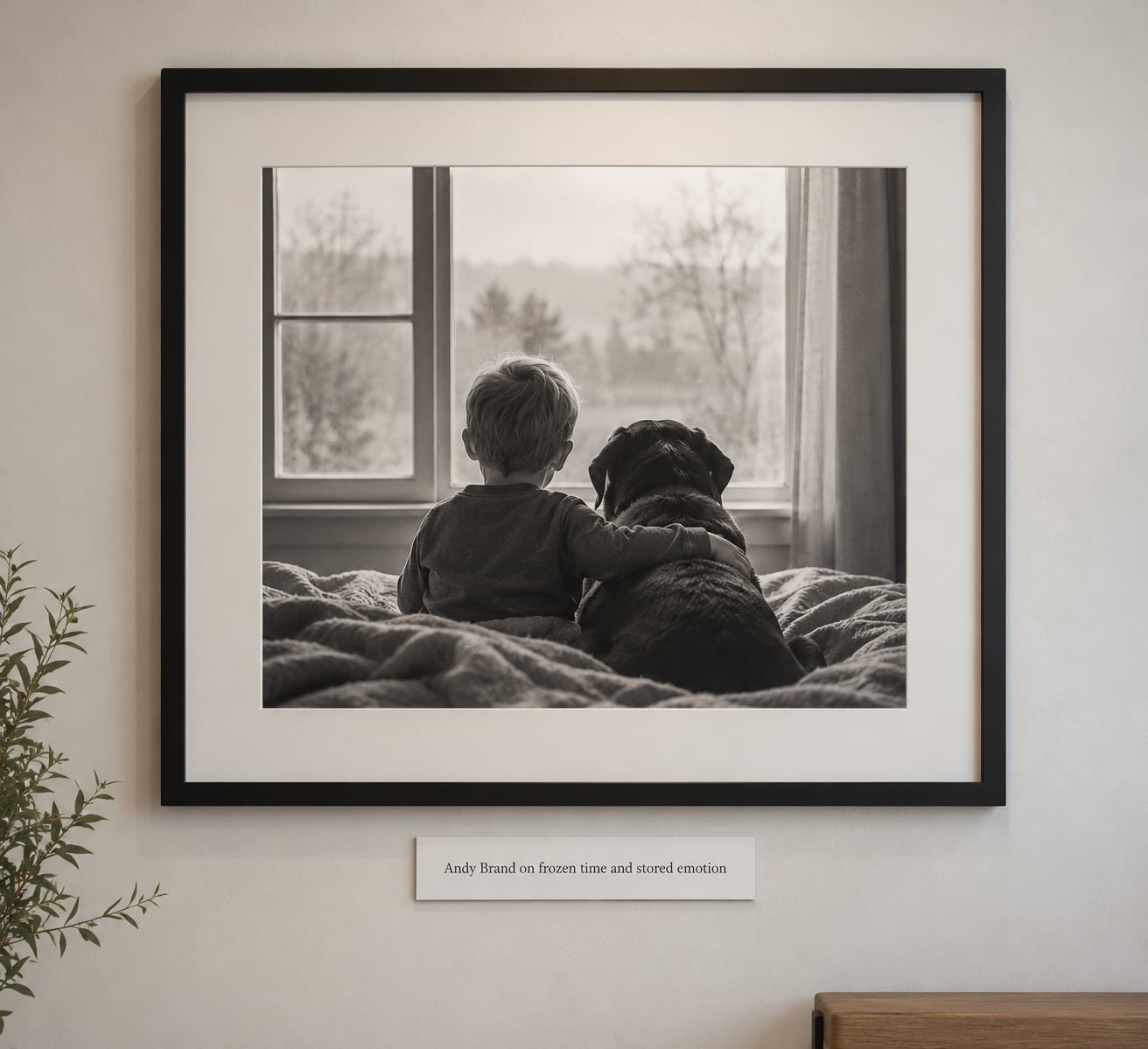
Use it with family, wedding, or fine art images. Photographs sit next to the words on a real estate listing because they carry emotional weight, and this quote names that weight out loud. Be careful with it in the hero, though. It is close to 25 words, so give it enough contrast behind it or it will disappear on a phone in daylight.
7. Richard Avedon on needing a photograph
Richard Avedon, the American portrait photographer who worked for Life and later for the fashion house Versace, drew a distinction between a camera and a photograph. One does not make a photograph just with a camera, one needs a photograph.
The distinction is useful on a services or approach page. It says the deliverable is a considered image rather than coverage of a clock, and it gives you a natural place to explain your process. If you shoot commercial work, this is a better fit than anything about inspiration.
8. Elliott Erwitt on the frame after the subject leaves
Elliott Erwitt, the photographer behind the well-known image of a pug and a man in a bath, is often credited with the line that the best photographs are taken just after the subject leaves the frame. The idea is about the traces people leave rather than their pose.
I have found this one most useful beside a minimalist architectural image or a candid frame with empty space in it. It explains why the shot works before the client has analysed it. For a wedding album or a documentary project, it also justifies the quiet images you chose not to crowd.
9. Ansel Adams on a picture that stands on its own
Ansel Adams also argued that a picture must stand on its own as a piece of work. He meant that an image should hold up as a print, judged on its own terms, without the caption or the story doing the work for it.
It works well as an opener for a curated gallery. Put it above a sequence where every frame has been chosen deliberately, and it explains your editing. Clients notice when a portfolio shows nine images out of a wedding rather than all four hundred, and this is a graceful way to say that curation is part of the job.
10. An unattributed moment, labelled honestly
Some lines travel so widely that nobody claims them. The phrase a photograph is a moment captured in time circulates in quote collections without a traceable source, and several photographers have flagged exactly this problem when debating favourite quotes.
Here is how to use that kind of line. Do not attribute it to a photographer you admire. Present it as a framing of your own, put it in italics, and keep it where nothing important rests on it, such as a time-based or before-and-after project header. An honestly unattributed line reads as voice. A falsely attributed one reads as a mistake the moment a client searches it.
Where to place a quote on your portfolio page
Most photographers gather quotes and then get stuck on the page. The placement matters as much as the wording, because a quote in the wrong slot is decoration. Match the tone of the line to the job the visitor is doing in that section.
Five rules for the hero section
The hero is read in about two seconds, often on a phone, while the page is still loading. Keep it under 25 words. Set it in a typeface that survives being read over a photograph, not a hairline weight that disappears in sunlight. Do not put it directly over a busy, high-contrast area. Leave it out of the image alt text, which should describe the photograph. And use a different quote from the one your three closest competitors use.
Placement by section
On the about page, use a line about seeing or craft. On a project page, use a line about story or time. On a gallery opener, use a line about the image standing on its own. On the contact page, keep it short, because a client trying to get a quote for a date does not want to stop and read a meditation. The footer is the one place a longer pull quote can sit without competing with anything.
Quote length tiers for web use
Under 10 words works for a hero, a watermark, or a printed proof. Under 25 words works for an about page or a project header. Anything longer belongs in the body copy of an about page, set as a pull quote where the reader has already scrolled. There is a practical reason for the tiers: on a phone, a long quote set over a photograph becomes a readability test the visitor will fail and leave.
How to credit a quote correctly
Put the name in the same sentence or directly under the line, and add where it came from when you know, such as a book title or an interview year. If the speaker is alive, a short note about who they are adds authority, for example the photographer whose documentary work ran in a named publication.
On the legal side, a short quotation used to comment or illustrate is treated differently from copying a photographer’s words wholesale, and in many jurisdictions it may qualify as fair use or fair dealing. I am not a lawyer and this is not legal advice, so if a quote is central to a campaign you are being paid for, ask someone who does commercial rights work. Keep a note of where you found each line so you can answer a client who asks.
Frequently Asked Questions
What is a good quote about photography for a portfolio page?
A good one is under 25 words, attributed to a named photographer you can trace, and matched to the section it sits in. It should say something about seeing, light, craft, or meaning that your images actually back up. If a line works on every photographer’s site, it is doing nothing for yours.
Where should I put a quote on my photography website?
The hero section for a short line under ten words, the about page for a line about craft or seeing, a project page header for a line about story, and the footer for anything longer. Keep long quotes off the contact page, where a client trying to reach you should not have to read anything long.
Can I use famous photographers quotes on my website?
Short attributed quotations used to illustrate your work are generally treated differently from copying a work wholesale, and many jurisdictions allow limited use under fair use or fair dealing. Rules vary by country and change over time, so ask a lawyer if a quote is central to paid work. Always credit the photographer.
Which photography quotes are misattributed?
The most common problems are lines circulated with no source at all, and quotations renamed to a more famous name than the original speaker. Check whether the wording appears in a book, interview, or exhibition wall text by that photographer. If you cannot trace it, do not attribute it.
What should I write in my photography portfolio about section?
Three short paragraphs usually do it: what you shoot and for whom, how you work on a shoot, and one specific detail that shows you have done it before. A single attributed quote about craft fits well after the first paragraph and gives the section a voice without filling it with filler.
How do I write a quote for my own photography portfolio?
Finish this sentence in your own words: the photograph I am proudest of shows blank. Then write one more line explaining what you saw there. Keep it under 25 words, skip the quotation marks, and set it apart from the borrowed quotes so visitors know it is yours.
Conclusion
Pick one line, put it in the section that matches it, and check the attribution before you publish. If the only quote that feels true to your work is the one you write yourself, use that instead. A single accurate sentence in the right slot beats a wall of borrowed lines, and it is the one clients remember.