
If you need one Toni Morrison line about memory, use this: All water has a perfect memory and is forever trying to get back to where it was. She wrote it for the 1987 essay The Site of Memory, published in William Zinsser’s Inventing the Truth. Below are ten more lines about memory, each traced to the novel, essay, or speech it came from, with a note on what it actually means.
These quotes about Toni Morrison and memory are not motivational filler. Memory in Morrison’s work is physical and involuntary, and it cuts both ways: it preserves what was stolen and it refuses to stay buried. That is why these lines get quoted at funerals, in classrooms, and on social media, sometimes with the source attached and sometimes without one.
Morrison’s word for memory in Beloved is rememory: a bodily, involuntary recall in which past and present overlap, so a character relives a room, a scent, or a touch as if it were happening now, with no conscious effort to summon it. Get that definition straight first, and the quotations below read differently.
I’ve grouped them by theme, and where a widely circulated line has no confirmed source I say so instead of guessing. Citation guidance lives at the end.
Table of Contents
- 1Quotes About Toni Morrison and Memory at a Glance
- 21. Memory as a way of holding history
- 32. Memory, identity, and the self
- 43. The stories we remember
- 54. Memory and the burdens of the past
- 65. Memory as an act of resistance
- 76. Memory and responsibility
- 87. Memory, ancestry, and belonging
- 98. Memory inside literature
- 109. The future depends on remembering
- 1110. A lasting line for reflection or sharing
- 12Frequently Asked Questions
- 13What is the most famous Toni Morrison quote about memory?
- 14Are all quotations attributed to Toni Morrison about memory authentic?
- 15Which Toni Morrison books are best for exploring memory and history?
- 16How can I use a Toni Morrison memory quotation in a classroom?
- 17Where can readers verify the source of a Toni Morrison quotation?
- 18Conclusion
Quotes About Toni Morrison and Memory at a Glance
Every line below is either traced to a named work or flagged as unconfirmed. The best-use column is the fastest way to pick one.
| Quote (abbreviated) | Source | Year | Best used for |
|---|---|---|---|
| All water has a perfect memory… | Essay, The Site of Memory | 1987 | Opening a talk, an essay on how memory works |
| You are your best thing, Sethe. You are. | Beloved | 1987 | Self-worth, reflective writing |
| She is a friend of my mind… | Beloved, Chapter 27 | 1987 | Explaining rememory in plain language |
| Life rolled over dead. Or so he thought. | Beloved, Paul D | 1987 | Grief, the limits of what memory fixes |
| You are my sister, you are my face, you are me. | Beloved | 1987 | Chosen family, belonging |
| But we do language. | Lecture, source varies | Late career | Writing, education, public speech |
| Home is memory, home is your history. | Firm source unconfirmed | Unknown | Casual sharing only, not citation |
| Not, oh, not to remember the room. | Beloved | 1987 | Close reading of narrative structure |
| The world’s beauty becomes enough. | Attribution varies | Unknown | A counterweight, used critically |
| These people are my access to me. | Essay, The Site of Memory | 1987 | Family history, closing remarks |
1. Memory as a way of holding history
The line that drives nearly every search on this topic is All water has a perfect memory and is forever trying to get back to where it was. It comes from The Site of Memory, the essay Morrison delivered in 1987 and later collected in Zinsser’s Inventing the Truth.
Her argument there is that memory is not storage. Water keeps the shape of wherever it has been and keeps trying to return, and writers work the same way, retrieving a scene rather than summarising an event. For a classroom, this is the cleanest entry point: short enough to write on a card, and it opens straight into a discussion about how a person enslaved was denied written records and had to keep history in the body instead.
Readers often pair it with the second most repeated memory line online, Home is memory, home is your history, home is where you work. Use that one with care; see item 7.
2. Memory, identity, and the self
You are your best thing, Sethe. You are. Beloved says it to Sethe, and it is the most quoted sentence in a novel full of quoted sentences. What makes it work on memory is the grammar: she does not tell Sethe what she was, she names what she is.
That distinction matters for reflective writing. Ask students to write about a memory they return to and to avoid describing only what happened. The prompt that gets the best work: name the version of yourself that memory keeps returning to, then say why that one and not another.
A companion line, Freeing yourself was one thing; claiming ownership of that freed self was another, adds the harder half. Escape is an event. Ownership is ongoing work, which is exactly the argument Morrison makes about a people who were freed on paper and then had to argue, in courts and kitchens and memory, that the freedom was real.
3. The stories we remember
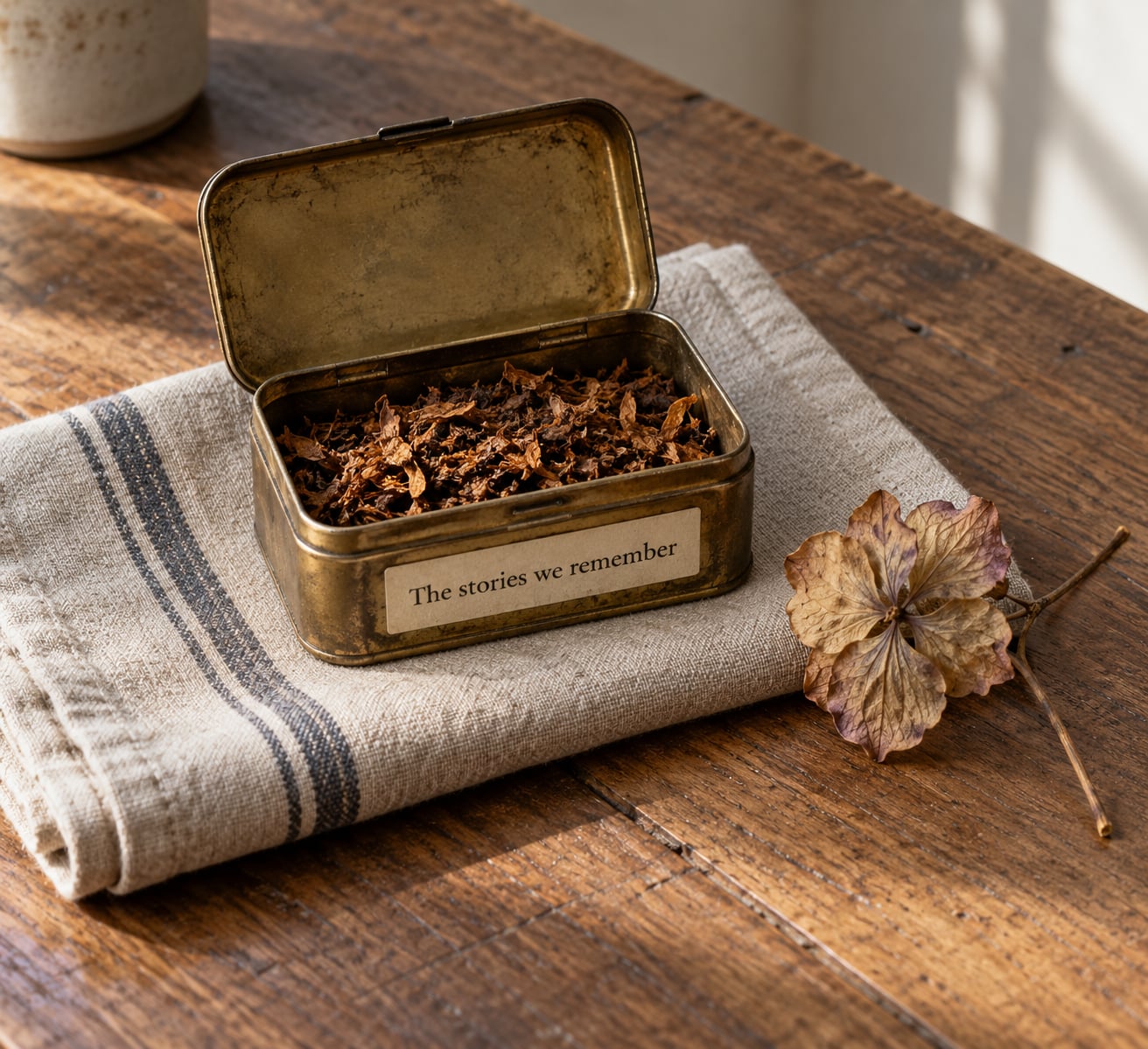
Readers on r/bookquotes single out one Beloved passage above the others, and it is Paul D talking about the woman named Sixo: She is a friend of my mind. She gathers me, man. The pieces I am, she gathers them and gives them back to me in all the right order. It sits late in the novel, around Chapter 27 in common editions.
The object is a tobacco tin, and that is the whole argument of rememory in one line. A person is scattered into fragments by what happened, and another person reassembles them without an archive. Paul D does not retrieve facts; he is restored.
For discussion, this is the passage to use when someone asks what Morrison means by memory being involuntary. The past arrives as a completed object in the hand, not as a decision.
4. Memory and the burdens of the past
Life rolled over dead. Or so he thought. The sentence belongs to Paul D in Beloved, and it works as a memory quote precisely because Morrison refuses the consoling version. He is wrong about being past it, and the novel spends its last hundred pages proving him wrong.
Do not flatten this into a slogan about moving on. The line is closer to a description of haunting: the past keeps its own schedule, and being upright does not mean being finished.
If you want the same theme in fewer words, You don’t remember nothing about how come I walk the way I do… Know it, and go on out the yard. Go on. Baby Suggs says it in Beloved. Walking the way you do is the memory. Recognising it and walking on anyway is the practice.
5. Memory as an act of resistance
You are my sister, you are my daughter, you are your face, you are me. The line appears in Beloved, spoken to Sethe by the girl called Amy Denver, and it is the most quoted evidence that Morrison treats memory as a counter-archive.
Slavery’s design was to make people untraceable to themselves: separate the families, replace the names, sell the mother away from the daughter. Morrison’s answer is to have a character insist on kinship that the law refused, and to do it in language the law could not register.
Students reach for this line when they need a quotation that does the work of evidence. Pair it with the line on claiming a freed self, and you have both halves of the argument: what was taken, and what is rebuilt in the telling.
6. Memory and responsibility
We die. That may be the meaning of life. But we do language. That may be the measure of our lives. This is usually given as a lecture line, and the exact venue is disputed across quote databases, so cite it as a speech rather than naming a date you cannot confirm.
The reason it earns a place in a memory collection is the middle clause. Language is what carries a life forward once the person carrying it is gone, which turns remembering from sentiment into an obligation to get the record right.
A good seminar question follows from that: if language is the measure, who is responsible for the version of history that gets told when the people who lived it are no longer available to correct it?
7. Memory, ancestry, and belonging
Home is memory, home is your history, home is where you work. You will find this attributed to Morrison across quote sites with topic tags for memories, home, and people, and nowhere attached to a novel or essay. I could not confirm a source, so treat it as unverified.
That is not a reason to throw it away, but it is a reason to label it. Write attributed to Toni Morrison, source unconfirmed if you use it on a card, and do not put it in a bibliography or an essay as sourced fact.
The idea behind it, that a place is a sum of remembered history rather than an address, runs through Morrison’s fiction anyway. A Mercy and Paradise both treat a house as what a community remembers about itself.
8. Memory inside literature
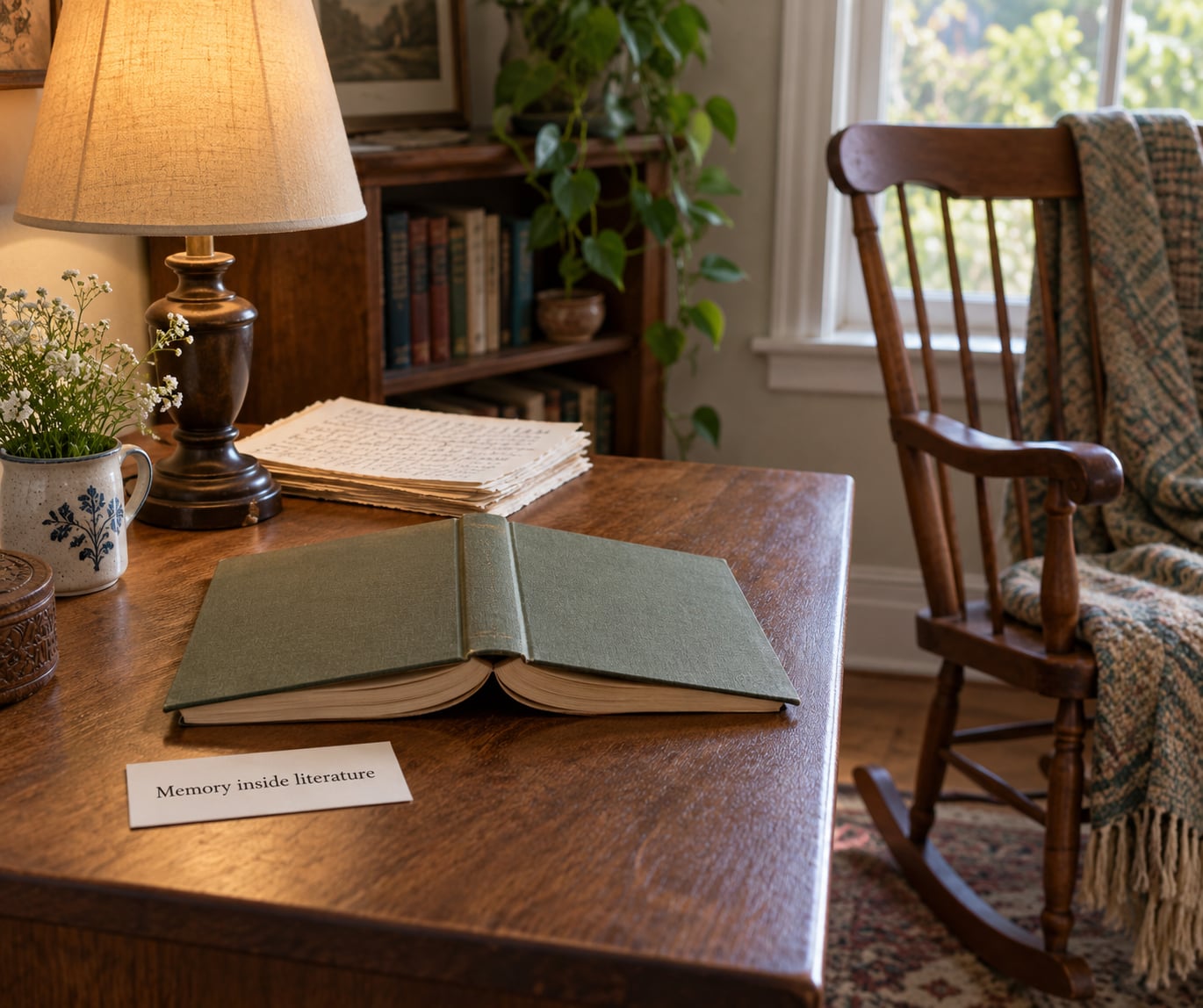
Not, oh, not to remember the room. To remember, rather, the time and place of your business, your adventure. Beloved again, and this one is about technique. Morrison is describing the difference between a location and an episode, which is the same distinction her narration keeps making.
On the craft side, her working habits are documented. I type in one place, but I write all over the house appears in Conversations with Toni Morrison from 1994. She also said in The Site of Memory that these people are my access to me; they are my entrance into my own interior life, which is a novelist describing research as an act of memory rather than an act of observation.
If you want the full memory arc in reading order, start with The Bluest Eye, then Song of Solomon, then Beloved. Jazz and Paradise extend it into the present tense.
9. The future depends on remembering
At some point in life the world’s beauty becomes enough. You don’t need to photograph, paint or even remember it. It is enough. This one circulates widely and is usually credited to Morrison without a specific work. Read it critically rather than as encouragement.
It says the opposite of most of this collection. Everyone else here argues that memory is a duty; Morrison, in this attributed line, describes the moment when the need to hold on lets go. Both can be true, which is why it belongs in a list about memory instead of a list about motivation.
For a reflective prompt, put the two positions side by side and ask which one your reader would rather leave behind. Disagreement is the point.
10. A lasting line for reflection or sharing
Close on the sentence with the firmest attribution in the whole essay: These people are my access to me; they are my entrance into my own interior life. It is from The Site of Memory, and it is the line I would put on the final slide of a class or the last card of a series.
Three habits keep these quotations honest. Name the work whenever you can. If you cannot, say the source is unconfirmed rather than guessing. And expect page numbers in Beloved to shift between editions, so cite the chapter as well and check the edition you actually read.
For a short list on a memorial or a classroom slide, the safe picks are the water line, the friend of my mind passage, and this one. All three have traceable origins.
Frequently Asked Questions
What is the most famous Toni Morrison quote about memory?
It is the water line from her 1987 essay The Site of Memory: All water has a perfect memory and is forever trying to get back to where it was. Morrison uses it to argue that memory is active rather than passive, that writers retrieve scenes the way water returns to an old shape, and that the past is carried physically. It is the line most often lifted into essays, talks, and quote cards.
Are all quotations attributed to Toni Morrison about memory authentic?
No. Several lines circulate widely with no confirmed source, including Home is memory, home is your history and the line about the world’s beauty becoming enough. Others are verified to a named novel or essay but are often truncated in ways that change their sense. Treat quote databases as leads rather than authority, and confirm anything you plan to cite against the published work itself.
Which Toni Morrison books are best for exploring memory and history?
Beloved is the essential one, with rememory, the tobacco tin passage, and the sustained treatment of slavery’s archive problem. Song of Solomon traces family memory back through national history, and A Mercy looks at ancestry, debt, and belonging in the colonial period. Paradise extends the theme into a contemporary community. Read Beloved first if you want the fullest treatment of memory as a physical process.
How can I use a Toni Morrison memory quotation in a classroom?
Give the work and year before the line, not after, so students see the practice of attribution first. A productive structure is one paragraph of context, the quotation, then a close reading of two or three words. The tobacco tin passage works well for explaining rememory, and the Baby Suggs line about walking the way you do works well for discussing the limits of remembering. Ask students to locate the passage in the text themselves.
Where can readers verify the source of a Toni Morrison quotation?
Start with the published work. Beloved and the other novels are widely available in print and digital editions, and The Site of Memory is collected in Inventing the Truth, edited by William Zinsser and published in 1995. Conversations with Toni Morrison, edited by Zsuzsanna E. Barna, carries her interview remarks. Page numbers shift by edition, so verify the chapter and the edition together before you cite a page.
Conclusion
Morrison’s memory is never a museum. It is water pressing back into an old shape, a tin that hands a man his own pieces, a woman telling another woman she is her best thing. Read closely, the ten lines above argue that remembering is how a self is kept and how a history survives people who were denied the chance to write it down.
If you only take one thing from this, take the water line and give it its source: The Site of Memory, 1987. Then pick one line you can trace to a chapter, and use it with the context attached. That habit, not the quote, is what separates a reader from a repost.