Short kindness quotes give elementary students one plain idea to carry around all day. A teacher reads one at morning meeting, unpacks it in kid language, and asks for one small way to act on it before lunch. That repeated pattern is what turns a poster on the wall into a habit, and it is why these quotes about kindness for elementary students keep showing up in classroom blogs and teacher forums.
Most of the lines below take under fifteen words, so they can be read aloud in a breath and still fit on a bookmark. I have matched each one to a grade band and a specific use, because a line that lands with a kindergartner often falls flat in fourth grade. Where a famous name is attached but the source cannot be confirmed, I say so rather than passing a guess along.
One quick definition before the list. In kid words, kindness is doing something helpful or thoughtful for another person, even when nobody is watching and even when you do not get a reward. It can be a word, a gesture, a share, or standing up for someone.
Table of Contents
- Quotes About Kindness for Elementary Students at a Glance
- 1. “Kindness is the language which the deaf can hear and the blind can see”
- 2. “No act of kindness, no matter how small, is ever wasted”
- 3. “What you do for yourself dies with you, but what you do for others remains”
- 4. “A single flower is a small but beautiful act for the earth”
- 5. “How far that little candle throws his beams! So shines a good deed in a weary world”
- 6. “We are all a little broken. But last time I checked, broken crayons still color”
- 7. “The best way to find yourself is to lose yourself in the service of others”
- 8. “Be kind to yourself, and be kind to those around you”
- 9. “Courage is often simply a willingness to be kind”
- 10. “Those who are kind often never receive the kindness they give away”
- Frequently Asked Questions
- Which kindness quote is best for young elementary students?
- How can teachers introduce a quote about kindness without making the lesson feel preachy?
- What are simple ways to display or share kindness quotes in a classroom?
- How can parents use these quotes to encourage kind behavior at home?
- How should adults handle inspirational sayings with uncertain attribution?
- Conclusion
Quotes About Kindness for Elementary Students at a Glance
Here is the whole list in one view so you can scan for the line that fits your room this week. The best grade band column reflects reading level and attention span, not ability.
| Quote (shortened) | Central idea | Best grade band | One classroom use |
|---|---|---|---|
| Kindness is the language the deaf can hear and the blind can see | Kindness is understood by everyone | Grades 3 to 5 | Read aloud, then ask who was kind to them this week |
| No act of kindness, no matter how small, is ever wasted | Small gestures count | Kindergarten to Grade 2 | Spot the small kindnesses on a class chart |
| What you do for others remains | Helping lasts | Grades 4 and 5 | Start a five-minute cleanup with a named goal |
| A single flower is a small but beautiful act for the earth | Caring for living things is kindness | Kindergarten to Grade 1 | Class plant observation and watering rota |
| So shines a good deed in a weary world | One good deed spreads | Grades 2 and 3 | Chain activity: one kind act inspires the next |
| Broken crayons still color | Accept people as they are | Grades 3 to 5 | Gentle discussion on including classmates |
| Find yourself in the service of others | Helping others shows who you are | Grades 4 and 5 | Pair a reader with a younger student |
| Be kind to yourself and to those around you | Self-kindness and kindness go together | Grades 3 to 5 | Reflection prompt in a journal |
| Courage is a willingness to be kind | Standing up is a kind choice | Grades 4 and 5 | Role-play a real inclusion situation |
| Kind people often never get the kindness back | Notice quiet helpers, say thanks | Grades 2 and 3 | Thank-you notes for classroom helpers |
1. “Kindness is the language which the deaf can hear and the blind can see”
This line says kindness speaks to everyone, no matter how they receive information or what they are able to do. For a classroom, that makes it a good line for talking about helping in different ways: reading aloud to someone who cannot see the board, using sign language, sitting with a student who is overwhelmed at a loud activity.
One honest note. This sentence is printed on mugs, shirts and posters with Mark Twain’s name on it, and it is regularly listed as a Twain quotation. No reliable Twain source has ever produced it, and Twain did write plenty about kindness in his own words. If you display it, label it as a saying of unknown origin rather than a Twain quote.
1a. A Simple Kindness Quote for Younger Learners
For a first or second grade class, shorten it to one idea: kind words reach people who cannot hear them well, and kind help reaches people who cannot see it themselves. Read a familiar picture book first, then ask students what the reader or the listener got from the story.
A model response sounds like this: when a student says, “I helped Mia find her glue,” the teacher can name the act and the effect in one sentence. “Mia did not know where to look, and you noticed and helped. That was kindness she could hear.” Naming it out loud teaches the class the vocabulary of noticing, which is the skill underneath the quote.
2. “No act of kindness, no matter how small, is ever wasted”
This one comes out of Aesop’s fables, where small and quiet actions are often the point of the story. Students can test it against their own day. Sharing a pencil. Returning a lost eraser to the desk it belongs to. Saying thank you to the custodian who empties the bin. None of those change the shape of a school day, and all of them are noticed by somebody.
Try a discussion prompt: which kindnesses do we never notice? The answers are usually small and specific, which is exactly why the line is useful with young readers. A teacher can collect the answers on chart paper and leave it up for a week, because a wall of small acts makes the abstract idea visible.
It is also short enough for a bookmark. Teachers running out of planning time often pin a single line per week rather than building a whole lesson, and this one takes almost none to prepare.
3. “What you do for yourself dies with you, but what you do for others remains”
The idea is permanence. A compliment is forgotten, but the person who received it still carries it. Teachers sometimes push back on this line because it can sound like self-effacement, and it is worth saying out loud that doing good does not make your own needs disappear. Read it as: your helpfulness outlasts the moment it happened.
For grades 4 and 5, pair the quote with something physical and lasting. A school cleanup works well. Give the class five minutes, a set of gloves and a clear area, and let them see the result of the work rather than just hearing about it. Then ask what will still be different in that hallway tomorrow morning.
That question is the whole lesson. It moves the conversation from “was that nice” to “what did that change,” which is a harder and more useful question.
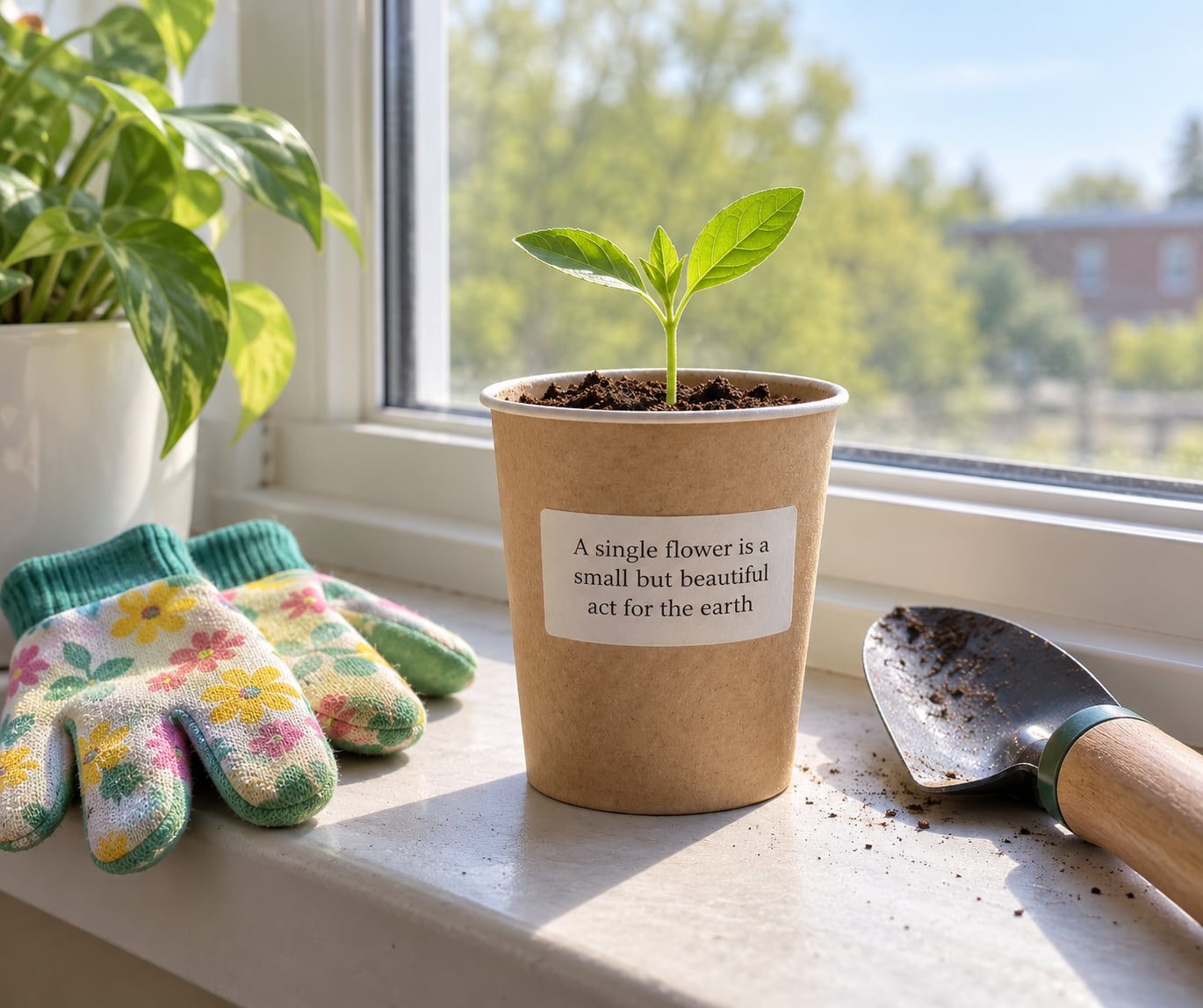
4. “A single flower is a small but beautiful act for the earth”
Thich Nhat Hanh wrote about attention and care for living things, and this line is widely circulated under his name. Like several items on this list, it is best treated as an attributed saying rather than a confirmed quotation.
For the youngest readers, the metaphor is easy to hold. One flower does not change the planet, and it is still worth planting. That is a low-stakes way to talk about caring for something outside yourself, and it connects directly to things they can actually do.
A class plant on the windowsill does the job well. Set up a simple rota, three or four names on the chart, and let the children water, observe and record the growth. Photos of the same plant at the start of the unit and at the end give you the arc the quote is really about.
Picking up litter on the school grounds is the outdoor version. Keep it short, five minutes, and finish by thanking the students by name for something specific they did.
5. “How far that little candle throws his beams! So shines a good deed in a weary world”
This is Shakespeare, from The Merchant of Venice, and the image is light travelling further than you would expect. A single act of kindness changes the mood of one person, and that person carries it into the next room. It is the closest thing on this list to what teachers call a ripple effect.
A chain activity makes the metaphor physical. One student does something kind, names the person it reached, and that person does something kind next. The chain keeps going until it runs out of names or out of time, and students are usually disappointed when it stops.
For grades 2 and 3, keep the window short. Two minutes, five links, and then a look at how many people one small act touched. The arithmetic matters here: one act became five, and the class did that without any rules.
6. “We are all a little broken. But last time I checked, broken crayons still color”
This line has no known author and exists mostly as a social media post, but the crayon image is doing real work with older elementary students. A crayon that is stubby, chewed or cracked still marks the paper. People who are struggling, loud, quiet or different still belong in the room.
Handle this one gently. Some children have been on the receiving end of exclusion, and asking them to reflect on their own brokenness in front of the class is not the point. Keep the focus on noticing what someone can do rather than cataloguing what has happened to them.
A workable prompt for grades 3 to 5: think of a classmate who does something well that other people sometimes miss. A student who is always quiet but draws carefully. A student who notices when someone is left out. Then write that observation in a kind card and deliver it privately rather than reading names aloud.
7. “The best way to find yourself is to lose yourself in the service of others”
Gandhi wrote about service as a way of understanding your own character, and young readers tend to grab the wrong half of the line. They hear “lose yourself” and hear something is being given up. The classroom version is simpler: you find out who you are by how you treat people.
Service for an elementary student means listening, helping and noticing needs. A practical example is reading partnerships. Pair an older student with a younger one for ten minutes a day, and switch the pairs every week so it does not settle into a permanent arrangement.
Ask both partners what they noticed. The younger child usually reports on the reading, the older child reports on patience and slowing down. Both answers are worth writing on the board, because they show that the same hour taught two different things.
8. “Be kind to yourself, and be kind to those around you”
This is anonymous, and it puts two ideas in one sentence. Most kindness lists only look outward. This one asks students to talk to themselves the way they would talk to a friend, which matters more than teachers often expect, because a child who cannot tolerate a mistake will not offer patience to anyone else.
Realistic kindness to yourself is not praise you do not mean. It is learning the word “yet,” getting up after a wrong answer, asking for help when you need it, and putting a difficult page down for five minutes. Those are observable, and they are teachable.
A reflection prompt for the end of a unit: name one thing that was hard for you, and one thing you are getting better at. Students write for three minutes, then share with a partner only if they want to. The choice about sharing matters, because the exercise is meant to lower the stakes, not raise them.
9. “Courage is often simply a willingness to be kind”
This is an adapted proverb, not a fixed quotation from a named writer, and I have kept the label so you do not print it as a documented line. The claim underneath it is easy to test. Being kind often costs something social: including the student nobody picked, admitting you were wrong, saying no to a joke that lands on someone.
That makes it a good line for fourth and fifth grade, who are starting to notice how groups form. Use a real situation rather than an abstract one. Someone is repeatedly left out of a game at recess. What are the options, and which of them takes a little courage?
Keep the discussion concrete. Name the choices, let students rank them, and let them name what each one feels like from the inside. Students are usually surprised that the kind option is not always the hardest one, and that surprise is the teaching moment.
10. “Those who are kind often never receive the kindness they give away”
This line is anonymous, and it is a reflection rather than a measurable claim. Nobody can count kindness given and kindness received, so present it as something to think about, not as a fact about the world. Students are precise about that distinction and will tell you so.
It works because it points at the classroom helpers. The student who tidies up without being asked. The one who brings the class plant back from home. The one who shares materials without being reminded. Those children rarely get a thank-you, and the quote is an invitation to notice them.
Try thank-you notes for grades 2 and 3. Students write one short note to someone who helped them this month and hand it over privately. Keep the bar low so nobody feels the writing has to be good. Watching a quiet student get a stack of notes does more for a class culture than any poster.
Frequently Asked Questions
Which kindness quote is best for young elementary students?
The Aesop line about no act of kindness being wasted works best with kindergartners and first graders because it is under ten words, has no abstract vocabulary, and points at things they already do. It also pairs naturally with a class chart where students name small acts they noticed. Lines with heavier phrasing, like the Shakespeare or Gandhi quotations, tend to land better in grades 3 and up.
How can teachers introduce a quote about kindness without making the lesson feel preachy?
Read it, then hand it to the class instead of explaining it yourself. Ask what they notice, what they wonder, and where they have seen something like it happen. Giving students the work of interpretation keeps the conversation curious rather than moral. If a quote has heavy wording, read a picture book that shows the same idea first, then come back to the line.
What are simple ways to display or share kindness quotes in a classroom?
Most bulletin boards fit one short line at a time, so rotate a single quote per week instead of covering the wall. Handwritten cards on a clothesline let you add new ones without repapering. A desk tent on each table works well for morning meeting, and kindness bookmarks in reading folders reach students during independent reading. Keep lines under fifteen words so they read at a glance.
How can parents use these quotes to encourage kind behavior at home?
Pick one line a week and let your child say it back to you at dinner. Ask where they saw kindness that day at school or at home, including kindness aimed at you. Younger children respond best to noticing a specific act out loud, so name what they did rather than telling them they were kind. A five-minute version of the same routine beats a long conversation.
How should adults handle inspirational sayings with uncertain attribution?
Say plainly that the author is unknown or commonly attributed, and then move on. Teachers who check sources before printing get more trust from other staff, and several famous kindness lines, including the deaf and blind one, have no verified origin at all. For printables, mark uncertain lines as Anonymous or Proverb rather than repeating a name you cannot confirm.
Conclusion
Ten lines, each with a grade band and one real use, is enough to start. Pick the quote that matches the students in front of you this week, read it in under ten seconds, and ask for one thing they can actually do before the bell rings. Do that on a Tuesday rather than waiting for a kindness week, and the wall display starts to matter on its own.