Most people can keep a daily quote habit alive for about ten days, and almost nobody keeps it past month two. The fix is not more quotes or a better app. It is a two-minute routine with a fixed trigger, one sentence written in your own words, and a small step that turns the line into a decision. That is the whole method for how to make a quote of the day habit stick.
I built this routine after starting and abandoning four of them, usually somewhere in week three. What changed was embarrassingly simple: I stopped treating the quote as reading and started treating it as a prompt with a written answer attached.
The whole thing takes under two minutes a day, plus about five minutes once a week. No experience needed, and you can start with whatever source you already use.
Table of Contents
- 1What You Need
- 2Step-by-Step: The Two-Minute Quote Routine
- 31. Choose a Reliable Source and Set a Daily Trigger
- 42. Read the Quote More Than Once
- 53. Write One Sentence in Your Own Words
- 64. Connect the Quote to a Real Situation
- 75. Use the Quote Somewhere Real
- 86. Review and Keep Your Favorites
- 97. Schedule a Weekly Reset
- 10Common Mistakes
- 11Frequently Asked Questions
- 12How long does it take for a daily quote habit to stick?
- 13What should I do after missing a few days of my quote habit?
- 14Should I save every quote I read?
- 15How do I find quotes I can trust?
- 16What if I start repeating the same quotes?
- 17Is there an app that gives me a daily quote I will actually use?
- 18Conclusion
What You Need
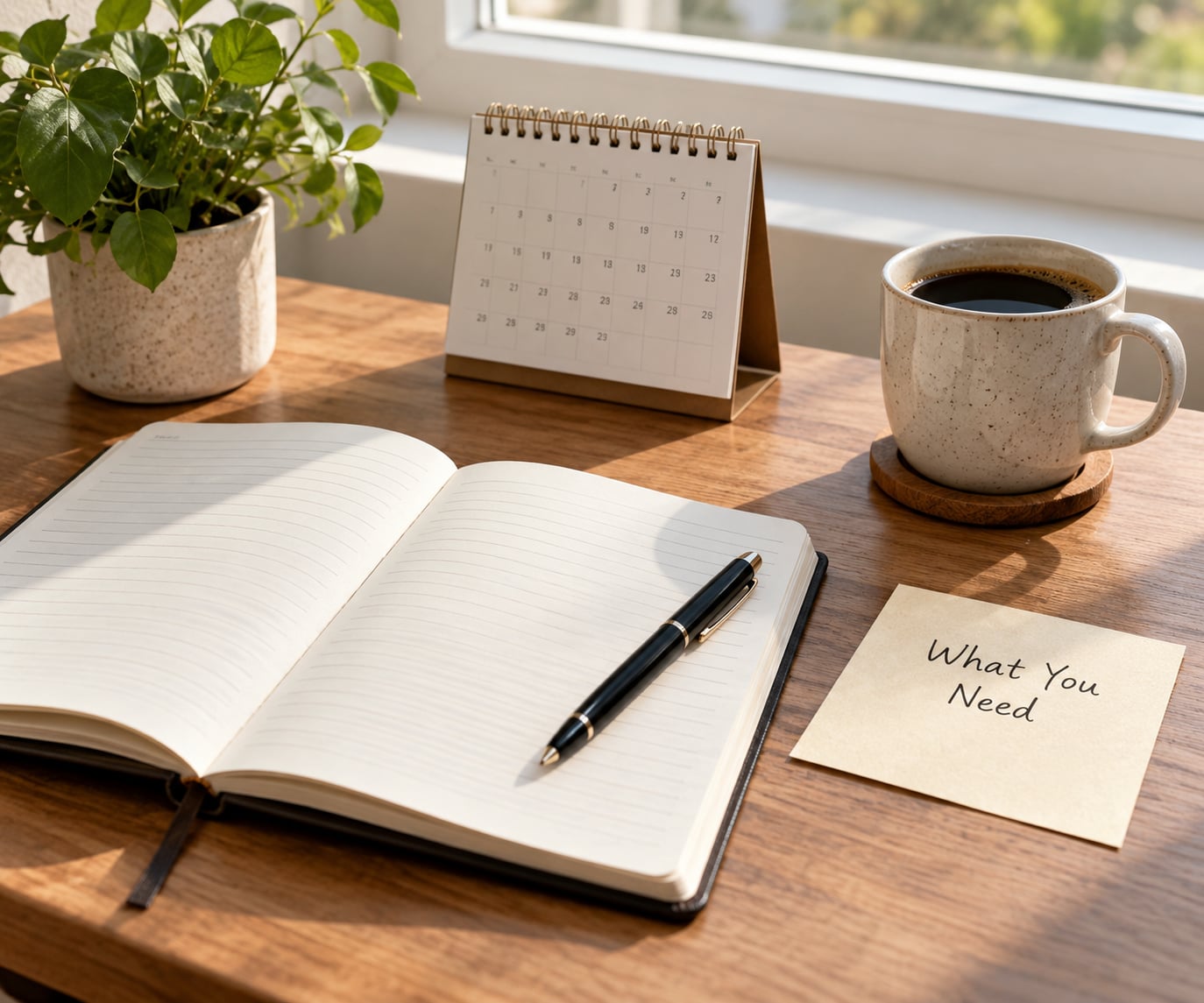
Four things, and none of them cost anything. Missing any one of them is usually why a quote habit quietly dies.
- A source you can trust. Pick one place that gives you a quote a day with the author named. A book you own, a calendar, a newsletter, or a site that prints attributions. The narrower the source, the better.
- A place to put sentences. A notebook, a notes app, a voice memo, the back of a receipt. Anything you can reach in under a minute.
- A trigger that already exists. Coffee brewing, the commute, sitting down at your desk, brushing your teeth, the last thing before the lights go off. Habits attach to existing ones far more easily than to a blank alarm.
- A way back to old quotes. A dated page in the same notebook, or a running document. Without this, your reflections vanish and the habit has no payoff after week three.
That last item is the one people skip, and it is the one that separates a habit that lasts from a habit that ends.
Step-by-Step: The Two-Minute Quote Routine
Seven steps, in order. The first four take a minute or two. The last three happen across a week and are what keep the routine from collapsing.
1. Choose a Reliable Source and Set a Daily Trigger
Write the sentence that does the work for you: After I ___, I will read one quote and write one line about it. The blank needs a real existing habit in it, because research on habit stacking suggests new behaviors attach most easily when they follow something already automatic. BJ Fogg’s behavior model makes the same point in different words: a cue you already feel is doing most of the work before motivation enters the picture.
Some that work in practice:
- After I pour my first cup of coffee, I read one quote and write one line.
- After I close my laptop at the end of the day, I read the next day’s quote.
- After I brush my teeth at night, I read one line and say it out loud.
- After I park at work, before I check email, I read one quote.
- After I finish my morning stretch, I read one quote while I make tea.
Pick one and write it where you will see it. People who write a specific if-then plan out loud are considerably more likely to follow through than people who simply intend to, which is the finding implementation intentions researchers have repeated for decades.
2. Read the Quote More Than Once
Most people read a quote once, feel something, and move on. That single pass leaves almost nothing behind, which is why the same line seems meaningless a week later.
Read it a second time slowly and find the phrase doing the actual work. In most quotes that is three to seven words. Write those words down separately from your reflection about them. Six weeks in, that column of phrases is the most useful thing in the notebook, and it costs nothing extra.
One habit worth borrowing from readers who write in about doing this: say the line out loud once. Reading a quote aloud each morning is the version people most often report sticking, because speaking forces you to hear whether the line sounds like something you would actually say.
3. Write One Sentence in Your Own Words
This is the step that decides whether the habit survives, and it takes about fifteen seconds. Paraphrase the quote in one plain sentence, using your own words and no quotation marks.
If the quote says discipline beats motivation, your sentence might be: I keep starting things and stopping when the feeling wears off.
Two rules make this work. First, never copy the quote’s language into your sentence, because borrowed phrasing skips the part of your brain that has to own it. Second, write in the past or present tense about your actual life, not about people in general.
If you skip this step, everything downstream gets harder. Reading alone is passive, and passive input is easy to lose.
4. Connect the Quote to a Real Situation
Now aim the line at something concrete. A quote about patience means nothing until it lands on the specific thing you’re avoiding. These prompts work well:
- Where does this apply at work this week?
- Which conversation this month does this touch?
- What am I currently stuck on that this speaks to?
- What decision in the next month does this change?
- What am I about to start that I’ve been putting off?
Write the answer as one sentence, and name a day if the quote implies action. “Apply this to the proposal by Thursday” is worth more than a paragraph of agreement with the quote. This is where reading turns into a decision, and it is the single biggest difference between a quote habit that lasts and one that evaporates.
5. Use the Quote Somewhere Real
Doing something with the line, even something small, moves it from something you saw to something that happened to you. Pick whichever of these fits your week:
- Say it out loud to someone before the day starts.
- Write it on the first page of your notebook or on a card you keep in your bag.
- Use it as the opening line of the one message you have been avoiding.
- Put it in a shared note with one other person, so you both see it on the same day.
- Use it to set the tone of a meeting, written where you will say it out loud.
One of these a week is plenty. The point is retrieval, not performance, and posting a quote online does not count if you never say it yourself.
6. Review and Keep Your Favorites
Once every week or two, read back through your entries. It takes three minutes and it is where the habit gets its reward. Look for the quotes you marked, group them by whatever pattern you notice, and keep maybe one in ten.
A useful rule for a personal archive: keep a quote only if your sentence under it still says something to you. Everything else can go. An archive of forty lines you would read again is worth more than a file of three hundred you have never revisited.
This is also where quote fatigue gets handled. The tiredness that sets in around week three usually comes from reading quotes with no filter, most of which were never worth your time. Curating your own shortlist fixes more of that than any new app will.
7. Schedule a Weekly Reset
Put a recurring five-minute block on your calendar, Sunday evening or Friday afternoon, whatever you will actually keep. In those five minutes:
- Read the week’s seven entries and pick the one that stayed with you.
- Add one sentence about why that one landed.
- Choose a theme or a single question for next week, such as patience, quitting well, or starting badly.
- Adjust your trigger if you missed days, rather than adding willpower.
A theme for the week solves the flatness that makes people quit. Seven unrelated lines can feel like noise; seven lines pointed at one question feels like a course.
Most people find this reset takes about four or five weeks to feel automatic, which is close to what the habit-formation research suggests for a behavior this size. Expect to need a few weeks of prompts before the cue starts working without you.
Common Mistakes
These are the reasons daily quote habits fade, in the order they usually happen.
Trying to read more than one quote a day. Ten quotes feels like progress and turns the habit into reading. One line, done daily, beats a small library read on Sunday.
Treating it like homework. If the routine feels like an assignment you might fail, you will avoid it on the days it matters most. Lower the bar on bad days instead: reading the quote and writing five words counts.
Skipping the written sentence. This is the step that fails first and the step that causes the habit to fail. Reading without writing produces a feeling, and feelings fade by lunchtime.
Trusting quotes you cannot verify. Plenty of circulating lines have no real author, and finding out a quote you liked was misattributed is a fast way to lose interest in the whole routine. Check the name before you write it down, and skip anything you cannot source. A short list of well-attributed lines is worth more than an endless feed of anonymous quotes.
Having no restart rule. Missing two days feels like failure, and the guilt keeps people away longer. The fix is the two-day rule, borrowed from Matt D’Avella’s work: never miss the same day twice. One missed day is a lapse, two starts to look like the old pattern.
Never looking back. A stream you never revisit has no memory and no payoff. Reading your own entries is the reward that keeps the habit feeding itself, and skipping it is why people stop in week three.
Choosing the same time as your lowest-energy hour. If the quote slot competes with the walk, the dishes, or the end of a long day, it loses. Move it to a cue that already feels easy.
Frequently Asked Questions
How long does it take for a daily quote habit to stick?
Most people report the two-minute quote routine feeling automatic somewhere between four and eight weeks, roughly the range a habit-formation study of 96 volunteers reported, where the median time to reach what researchers called automaticity was 66 days and the full span ran from 18 to 254 days. Simpler versions moved faster than elaborate ones. If your version is under two minutes and the trigger is solid, expect closer to the fast end.
What should I do after missing a few days of my quote habit?
Do not restart from zero and do not try to make up the days. Open the notebook, pick today’s quote, and write one sentence. That is the entire restart. The two-day rule is the useful guardrail: one missed day is a lapse and means nothing, while two in a row is the point where the old pattern starts returning. Most people who quit a quote habit never quit because of a missed day, they quit because of the guilt after one.
Should I save every quote I read?
No. Saving everything turns your archive into a storage problem you will never revisit. Keep a small share instead, roughly one in ten, and only if your sentence underneath still says something to you. You can mark favorites with a dot in the margin and group them by theme during your weekly reset. A short archive you actually reread is worth far more than a large one you never open.
How do I find quotes I can trust?
Look for sources that always name the author, and treat anything circulating without attribution as unverified until you find where it came from. Books, your own notes from reading, and quotes you heard from a specific person are the safest material. Search the exact wording before you share a line with an author attached. Misattributed quotes are common enough that getting caught repeating one ends the habit for most people faster than anything else.
What if I start repeating the same quotes?
Repetition is only a problem when the line is recycled and the reflection is skipped. If you keep writing a new sentence under a familiar quote, the repetition is reinforcement rather than laziness. If the repetition feels stale, set a theme for the week and read only lines that speak to it, or pull from a source you do not normally use. Boredom around week three is a signal to curate harder, not to quit.
Is there an app that gives me a daily quote I will actually use?
There are plenty of apps that send a quote every morning, and the delivery part is the easy bit. The ones people keep using are the ones that let you write one line against the quote and read your old entries back, because that is the step that makes the habit hold. Set the reminder inside an existing routine rather than on a bare timer, and expect a few weeks before it stops needing the prompt.
Conclusion
A quote habit sticks when it is small, attached to something you already do, and finished with a written line of your own. Read once more, paraphrase, aim it at a real situation, and use it somewhere. Review the week’s entries on a fixed day.
Start with one thing tonight: pick the time, choose one quote from a source that names its author, and write a single sentence connecting it to something happening in your day this week. Two minutes, then close the notebook and move on.