
Caregiving exhaustion is the physical, mental and emotional depletion that builds when the demands of caring for someone outpace your own reserves of sleep, energy and support. When you are that depleted, quotes about caregiving for an exhausted caregiver work best when they name what you are actually feeling instead of asking you to be grateful for it.
Most caregiver quote lists open by calling caregiving noble. That is the wrong door for someone who has been awake at 4 a.m. for the third night this week. The ten lines below were chosen for depleted readers: they cover fatigue, guilt, resentment, rest and asking for help, and every quotation that carries a named author is given in its commonly published form so you can find the source yourself.
A word on sourcing. A handful of these sayings have no traceable origin, and I have marked them as unattributed rather than attaching a famous name to them. Two entries are original reflections written for this article. If you plan to print a quote on a card or in a message, checking the original source is always worth five minutes, because half the internet’s caregiver quotes circulate with invented attributions.
Table of Contents
- 1Quotes About Caregiving for an Exhausted Caregiver at a Glance
- 21. “You Do Not Have to Be Perfect to Be Exhausted”
- 32. “Caring for Others Can Fill You with Joy”
- 43. “To Care for Those Who Once Cared for Us Is One of the Highest Honors”
- 54. “I Am Responsible for Another Human Being”
- 65. “The Art of Care Is in the Small Acts of Love”
- 7How to Choose a Caregiver Quote That Truly Helps
- 86. “Rest Is Not Idleness”
- 97. “Almost Everything Will Work Again If You Unplug It for a Few Minutes, Including You”
- 108. “It Is a Marathon, Not a Sprint”
- 119. “You Cannot Pour from an Empty Cup”
- 1210. “Be Patient with Yourself; Self-Care Takes Time”
- 13Frequently Asked Questions
- 14What is a good quote for an exhausted caregiver?
- 15How can caregiver quotes be used in a card without making them feel dismissive?
- 16Are gratitude quotes helpful for someone who feels worn down by caregiving?
- 17When should an exhausted caregiver ask family or friends for help?
- 18What if rest does not fix caregiver exhaustion?
- 19Conclusion
Quotes About Caregiving for an Exhausted Caregiver at a Glance
| Quotation | Speaker or source | Central theme | When it may help |
|---|---|---|---|
| You do not have to be perfect to be exhausted | Original reflection | Permission to be depleted | When you think admitting fatigue means failing |
| Caring for others can fill you with joy | Maya Angelou, commonly published | Purpose alongside strain | On days you want to remember why you started |
| To care for those who once cared for us is one of the highest honors | T. Carew | Reciprocity and honor | When you are caring for a parent or spouse |
| I am responsible for another human being | Widely shared, unattributed | The weight of responsibility | At the moment you realize you have taken on too much |
| The art of care is in the small acts of love | Widely shared, unattributed | Small doable acts | When the big picture feels hopeless |
| Rest is not idleness | John Lubbock | Rest as part of the work | When someone tells you to push through |
| Almost everything will work again if you unplug it for a few minutes, including you | Anne Lamott | Brief pauses | When you need one small permission today |
| It is a marathon, not a sprint | Unattributed proverb | Pacing and endurance | When the road ahead looks impossibly long |
| You cannot pour from an empty cup | Unattributed proverb | Refill before giving | When you need to justify accepting help |
| Be patient with yourself; self-care takes time | Original reflection | Compassion over productivity | When you have failed at self-care again |
1. “You Do Not Have to Be Perfect to Be Exhausted”

This line is original to this article, not a quotation from anyone. It exists because the most common belief tired caregivers carry is that depletion is evidence of a personal defect.
Naming fatigue changes what happens next. Once exhaustion has a name, you can describe it to a doctor, to a sibling, or to yourself without dressing it up as something else. The point is not that rest has to be earned by suffering first. It is that tired is a fact about your body, not a verdict on your love.
Try writing it in the margin of whatever you are reading right now. Then do the smallest thing that would count as care today: eat something warm, close your eyes for twelve minutes, or hand one task to someone else and let it stay handed over.
2. “Caring for Others Can Fill You with Joy”
This is the wording most commonly published under Maya Angelou’s name, and it circulates widely in caregiver collections. If you are planning to publish or print it, check the wording against the Angelou work you are citing before you commit to a version.
Read it as half a sentence rather than a whole promise. Caring can bring purpose, closeness and meaning, and at the same time it can drain you, and both can be true on the same Tuesday afternoon.
The line goes wrong when it becomes an obligation to feel joyful. If what you feel today is flat, numb or resentful, those feelings are information, not ingratitude, and they deserve the same attention as any good day.
3. “To Care for Those Who Once Cared for Us Is One of the Highest Honors”
This reflection is attributed to T. Carew, who wrote publicly about caring for her parents. It has become one of the most repeated lines in family caregiving circles, particularly for adult children looking after aging parents.
Honor and exhaustion are not opposites. You can consider it an honor to wash your mother’s hair and still fall asleep fully dressed in a chair at 9 p.m.
What the line does well is describe what you are doing without telling you to keep doing it alone. The caregiving your person needs for years back is real, and so is your right to be supported through it now.
4. “I Am Responsible for Another Human Being”
This one circulates widely without a reliable author, usually on caregiver appreciation walls and thank-you cards. Treat it as a shared caregiving line rather than a documented quotation.
It is useful precisely because it is uncomfortable. Responsibility for another person is enormous, and most exhausted caregivers arrived at that responsibility by accident rather than planning, one appointment and one night shift at a time.
The risk is that it becomes a weapon against you. It is not a contract. Being responsible for someone does not mean being responsible for every thought they have, every mood they have, or every decline they cannot stop.
Forum writers describe the flip side of this clearly. On the Alzheimer’s UK forum, one caregiver wrote that they had reached a point where they simply could not push themselves to do anything, as though they were paralysed. That kind of shutdown is a signal, not a character flaw.
5. “The Art of Care Is in the Small Acts of Love”
Another widely shared line with no traceable original source. It appears on thank-you cards, mugs and framed prints, usually unattributed.
Its usefulness is scale. When the whole situation feels too big to touch, small acts are the only kind available anyway.
- A medication reminder written on the fridge in a large hand.
- A ten-minute phone call at a fixed time each evening.
- Batch cooking on a Sunday so four weekday dinners are handled.
- A glass of water left at the chair where someone sits most of the day.
Pick one that takes under two minutes. Care that fits into the day you actually have is what keeps happening; care that requires an ideal day is what keeps not happening.
How to Choose a Caregiver Quote That Truly Helps
Most quotes land badly for one of three reasons: they praise sacrifice, they imply you should feel grateful, or they are too generic to attach to a single hard morning. Here is a filter I would actually use.
- Does it acknowledge exhaustion, or does it require strength you do not have today?
- Does it offer self-compassion, or does it quietly suggest you try harder?
- Does it point to concrete support, such as rest, shared tasks or professional help?
- Does it leave room for boundaries, including the ones that limit what you give?
- Does it come from someone with real caregiving experience, or only from someone admiring caregivers from a distance?
That last point matters. Writers who have done the work tend to write about mechanics, while everyone else writes about admiration. Dana Reeve, who cared for her husband Christopher for nine years, is a well documented example of a lived-experience voice in this space.
For the quote you send to somebody else, add one specific sentence about what they actually did this week. A line plus a detail lands. A line on its own reads like a card you bought because you did not know what to say.
6. “Rest Is Not Idleness”
This line is by John Lubbock, from The Use of Life, and it predates modern caregiver language by well over a century. It has survived because it answers the exact objection tired caregivers keep hearing.
The objection sounds like: resting is wasting time that could go to care. But fatigue does not subtract reliably from capacity. It adds error.
Missed medication doses, wrong doses, patience snapping over something small, falling asleep standing up, misreading a symptom because you have been awake for nineteen hours. Rest is the thing that reduces those risks, which makes it part of the care rather than a break from it.
That reframe is the one most exhausted caregivers say finally makes sense. Sleep protects the person you are caring for, because a depleted caregiver makes more mistakes.
7. “Almost Everything Will Work Again If You Unplug It for a Few Minutes, Including You”
This is Anne Lamott’s line, from Bird by Bird. It is funny, which is part of why it works on people who cannot tolerate another earnest poster.
Caregiving rarely allows a real unplug. So keep the pause small enough that it survives a bad week: step outside for four minutes, drink a full glass of water, breathe slowly for ten, put the phone face down, or ask one person to take a single task.
On caregiver forums, the advice that keeps getting recommended is consistently low effort. One thread on r/CaregiverSupport had people saying that when you are tired, you simply need to rest, not go out somewhere or do something. That is the bar. Rest does not have to be an event.
Do something that smells nice, read four pages, sit with coffee. Small and boring beats ambitious and abandoned.
8. “It Is a Marathon, Not a Sprint”
An unattributed proverb, and the standard advice in caregiver support groups. Endurance framing reassures people who have just realized they are in this for years, not weeks.
Here is where it needs a caution. The marathon line can become permission to keep grinding through warning signs, because slow and steady sounds healthier than stopping.
Fatigue, sleep disruption and loss of interest that lasts more than two weeks are reasons to talk to a clinician, not to pace yourself harder. Caregiving duration is not a reason to defer care for yourself, and no line on a card should ever be used to talk someone out of that conversation.
Use this quote for the anxious part, the part that believes the situation cannot possibly last this long. Do not use it for the part that needs a phone call.
9. “You Cannot Pour from an Empty Cup”
An unattributed proverb, endlessly repeated. It is good at naming a feeling and weak at fixing one, because nearly everyone who says it still has the same full schedule on Monday morning.
Turn it into a list instead. Who shares the Saturday shift? Which task could go to a home health aide for a few hours a week? Which person asks to help can be told exactly what to do? What gets protected if a relative covers one evening a month?
Then protect sleep as if it were a medical appointment, because for a depleted caregiver it effectively is. And if money is the barrier, note that respite is not the only form: a neighbor who sits for an hour, a church group that cooks on Sundays and a school-district respite program can all buy back a slice of time.
The cup refills through other people’s hands. That is the whole point of the proverb, and it is why accepting help is the practical version of it.
10. “Be Patient with Yourself; Self-Care Takes Time”
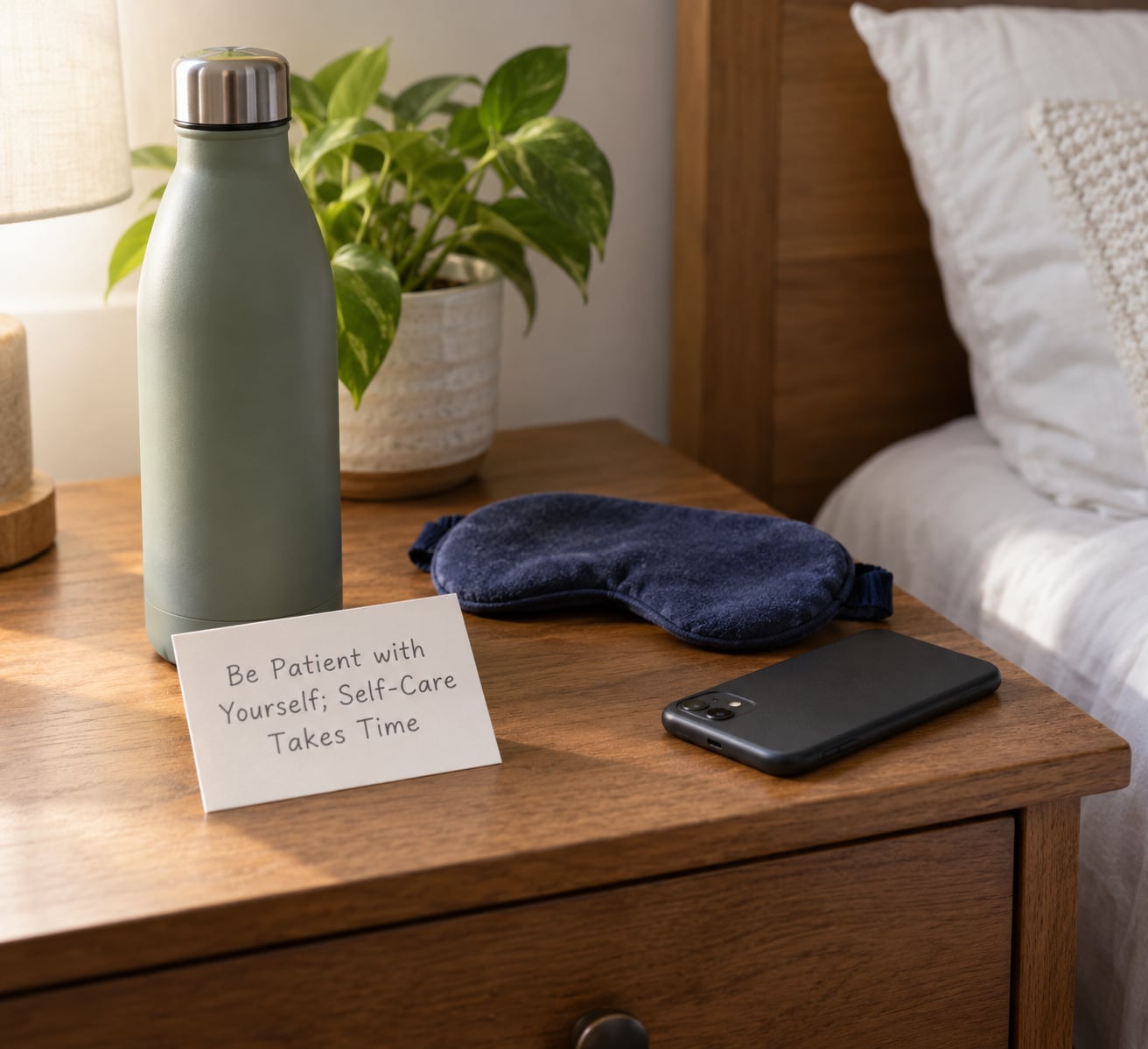
This closing line is original to this article. It is here because the most common self-care failure is not doing the wrong thing, it is trying to do a ten-step wellness routine on the one day with thirty free minutes.
Patience with yourself means shrinking the ask. One glass of water. One scheduled night of sleep. One phone call about how you are coping, made before you are in crisis so the conversation is easier.
Self-care that requires energy you no longer have will keep failing, and each failure becomes more evidence that you cannot even manage the basics. That is a design problem, not a character problem, and it is fixable by lowering the size of the task.
Updated for 2026. These quotes are meant to name what you are carrying, not to add another job to the pile.
Frequently Asked Questions
What is a good quote for an exhausted caregiver?
A good quote names the feeling accurately instead of demanding gratitude. The most useful lines acknowledge fatigue, permission to rest, or the value of accepting help. Pick one that describes your situation without implying you are failing, and read it where you will see it daily, such as a lock screen note.
How can caregiver quotes be used in a card without making them feel dismissive?
Pair the quote with one specific detail about what the caregiver actually did that week, such as managing a medication change or sleeping through the night for the first time in a month. A line alone reads as a mass-produced card. A line plus a real observation reads as someone paying attention, which is what the recipient is usually checking for.
Are gratitude quotes helpful for someone who feels worn down by caregiving?
Gratefulness lines often land badly on depleted caregivers, because they read as a demand for a feeling you do not currently have. They work better early in caregiving or in a thank-you note to a professional caregiver who chose the work. When someone is worn down, lines about rest, shared load and permission to pause tend to land instead.
When should an exhausted caregiver ask family or friends for help?
Ask before you are in crisis, because most people say yes more readily when the request is concrete. Be specific: one evening a week, one bath night, one grocery run, or a standing Saturday shift. If several specific requests are declined, that tells you something useful about your support, and it is worth raising respite care, an aide or a local caregiver support group.
What if rest does not fix caregiver exhaustion?
If sleep, short breaks and help with tasks have not shifted how you feel, exhaustion may be sitting alongside depression, anxiety or grief. Fatigue that lasts more than two weeks, loss of interest in things you used to enjoy, hopelessness or feeling trapped are reasons to talk to a doctor or a counselor. Quotes can accompany that conversation, but they cannot replace it.
Conclusion
Start with the line that names today rather than the one that sounds best. Put it where you will see it, then convert it into one specific act: one shared evening, one protected night of sleep, one specific request, or one hour where nobody needs you.
If nothing on this list fits the week you are having, that is worth taking to a doctor rather than to another quote. Words can name a burden. They cannot lift it, but they can tell you that other people have carried something similar.